

On Thursday, US prosecutors unsealed a superseding indictment charging Nicolás Maduro and Cilia Flores with conspiracy to commit torture. Six outlets on two continents covered it, and read side by side they are largely one document: the indictment, relayed. The clause “electric shock, asphyxiation, rape, forced nudity, prolonged isolation, starvation, punishment cells, and psychological torture” appears verbatim in the BBC, CBS, and Fox reports [1][2][4], with NPR and ABC running fragments of it [3][5]. The sourcing is the filing itself plus the government’s voices outside the courthouse, including FBI Director Kash Patel’s “They will now answer for their crimes,” relayed flat by CBS and ABC [2][5]. None of this is automatically a sin. The allegations are grave, and as the BBC itself notes, they “echo many of the accusations long made by prisoners who have been released from detention in Venezuela” [1]. The problem is what the relay crowds out, and what it quietly renames.
A raid by any other name
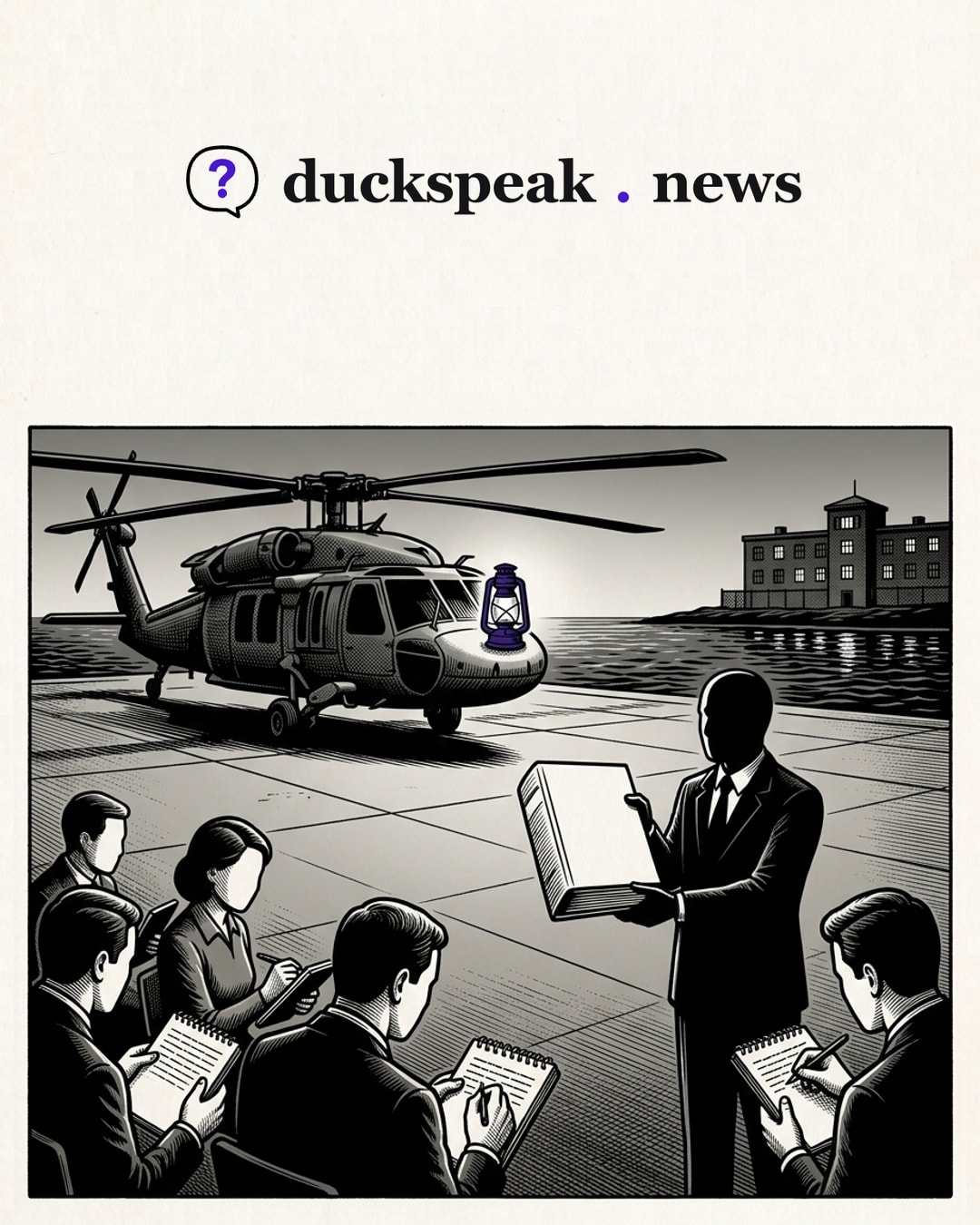
How did Maduro get to a Brooklyn detention centre? The BBC: “US forces seized them in a pre-dawn raid on their compound” in Caracas [1]. CBS: “The U.S. military took the couple into custody in an overnight operation” [2]. NPR: “forces seized them from their Caracas home in a middle-of-the-night raid” [3]. Fox names the thing, “Operation Absolute Resolve,” and its own setup copy refers to “his capture by U.S. Special Forces” [4]. Those are the facts as reported. The frame-word, though, comes from the government. NPR reports, without comment, that “U.S. President Donald Trump’s administration has defended the raid to capture Maduro as a ‘surgical law enforcement operation’” [3]. Special forces extracting a head of state from a foreign capital is “law enforcement.” NPR’s article contains both the euphemism and the details that strain it, and never lets the two touch. RFI, the French outlet, is alone in calling the event what its own details describe: “une spectaculaire opération militaire américaine au Venezuela” (a spectacular American military operation in Venezuela) [6]. It takes the French report to put “military” in the sentence.
The word “kidnapping” does appear in this coverage, sorted with care. Fox quotes the indictment accusing the couple of neutralizing opponents “including through kidnappings” [4]. NPR quotes former detainee Matthew Heath, who says the prosecution “will do more to prevent the kidnapping of Americans by rogue regimes than a hundred press releases from the United Nations” [3]. And in the final paragraph of NPR’s piece, Maduro’s own description: he “has called himself a prisoner of war and his capture a kidnapping” [3]. Three uses. Two describe crimes committed by others. The one that would apply the word to the US operation is framed as the defendant’s eccentric claim and parked at the bottom. The same act, armed men taking someone by force, gets a different verb depending on who does it. That is the Newspeak mechanism at work, not because anyone lied, but because the vocabulary was sorted before publication.
What the relay left out
The BBC’s report contains two facts that complicate the “justice delivered” frame, and only the BBC contains them. First, “his vice-president, Delcy Rodríguez, was sworn in as interim leader with the backing of the Trump administration” [1]. Second, UN High Commissioner Volker Türk “has warned that his office has received reports alleging that detainees continue to be tortured even after the seizure of Maduro,” having said in March that “structural and systemic human rights concerns” persisted “despite Maduro’s ousting” [1]. More than 300 political prisoners remain behind bars, according to Foro Penal [1]. By the press’s own account, the alleged system of repression outlived its alleged architects, under a government installed with Washington’s backing. CBS, NPR, Fox, ABC, and RFI carry none of this [2][3][4][5][6], though RFI’s footer at least links to a report on “les promesses non tenues de l’après-Maduro” (the unkept promises of the post-Maduro era) [6]. The torture story, as framed, ends with the torturer in a dock.
There is also a sorting of victims. Fox’s headline is “conspiracy to torture Americans” [4]. NPR relays the prosecutor saying “thousands of Venezuelans, and some Americans, were tortured” [3], yet the human detail across the US outlets is reserved for the Americans: Victim-7, Victim-8, Victim-9 [4][5]. The BBC alone gives space to Venezuelan former detainees, Javier Tarazona’s 46 days in a punishment cell and Ángel Godoy’s months of isolation [1]. There is a jurisdictional logic to why a US indictment would centre US citizens; no outlet explains it, so the reader is left with the impression, never examined, that American suffering is what made torture prosecutable.
NPR alone mentions that Maduro “has been under investigation for years by the International Criminal Court over allegations of crimes against humanity” [3], in passing, with no exploration of why an existing international mechanism for precisely these crimes was bypassed in favour of a Manhattan courtroom, or what becomes of that investigation now. The jurisdictional question surfaces only as a defence motion on immunity grounds [3][4][5], a technicality rather than the genuinely unsettled question it is: a US court prosecuting a foreign head of state for acts committed in his own country. (Note: the outlets never pose this question, which is the point; whether the immunity argument would succeed is beyond this critique.)
Two judges, one hearing
The relay has a quality-control problem. CBS reports that Thursday’s bail hearing ended when “The judge, Henry J. Ricardo, denied bail for Flores,” quoting him: “The evidence is strong, very strong” [2]. NPR, Fox, and ABC all report that Judge Alvin Hellerstein denied the same request [3][4][5], with ABC quoting him: “Jail is not a nice place to be, but these are serious allegations” [5]. CBS attributes the phrase “serious allegations” to Ricardo; ABC attributes it to Hellerstein [2][5]. Same hearing, same day, two judges, one shared quote. At minimum, someone has the presiding judge wrong, and no outlet has noticed. Fox also dates the original charges to “a 2011 indictment that President Donald Trump’s Department of Justice unsealed in 2020” [4], while CBS says Maduro and 14 others were “first indicted in March 2020” [2]; possibly reconcilable as a sealed indictment later unsealed, but again nobody does the reconciling. And Fox drops a genuinely extraordinary fact, that “The Treasury Department authorized Venezuela to fund Maduro’s legal defense” [4], with no explanation of what that means. When six newsrooms run the same document, nobody is in the courtroom.
The anesthetic is the content
Two mechanisms are operating at once. The Orwellian one is the vocabulary sorting above: “raid” versus “kidnapping,” “operation” versus any word that names the actor. The Huxleyan one is subtler. The torture catalogue is genuinely horrific, and it fills the available space: electric shock to genitals, a prisoner forced to eat his own vomit [4][5], beatings “approximately every half an hour” for two days [5]. The reader absorbs atrocity and comes away feeling informed; the structural questions (why this court, what precedent, what continues in Venezuelan cells now) never surface, not because anyone suppressed them but because there was no room left after the horror. Nobody needed to censor anything; the indictment was absorbing enough. Even the anonymisation is inherited wholesale, the outlets adopting the filing’s own “Victim-7,” “Victim-8,” “Victim-9” [4][5], with only NPR noting that the indictment never names them [3]. And of everything said outside the courthouse, the sentence two outlets on two continents chose to relay was the prosecutor’s “This is the epitome of corruption” [1][3]: torture, an atrocity, recategorised as misgovernance in the one soundbite readers will keep.
What a reader would need instead
- The UN High Commissioner’s ongoing Venezuela reporting, which only the BBC carries here [1]; his office is the institution actually tracking whether torture continues after Maduro.
- Foro Penal’s counts of remaining political prisoners and the reach of the amnesty law [1].
- The ICC’s existing investigation [3], and what becomes of it now that a national court has taken the case.
- The immunity and jurisdiction question treated as law rather than as a defence ploy.
- Reconciled courtroom facts: which judge denied bail, and when the original indictment actually issued.
- The precedent question, posed by nobody: if one state’s forces may extract a sitting head of state for trial in the extracting state’s courts, what does coverage of the next such extraction look like? Six outlets had the space to ask. All six spent it on the same paragraph.