

The headline template
Four outlets, one story, almost one verb. GB News: “Downing Street hits back at Pete Hegseth” [1]. The Independent: “Downing Street hits back after Trump’s war secretary diminishes UK’s role” [2]. The Mirror: “Downing Street hits backs at US Defence Secretary” [4]. The Guardian is the outlier with “Hegseth wrong to say most non-US Nato forces in Afghanistan did not fight, says No 10” [3], though its body text also leans on “direct condemnation” [3].
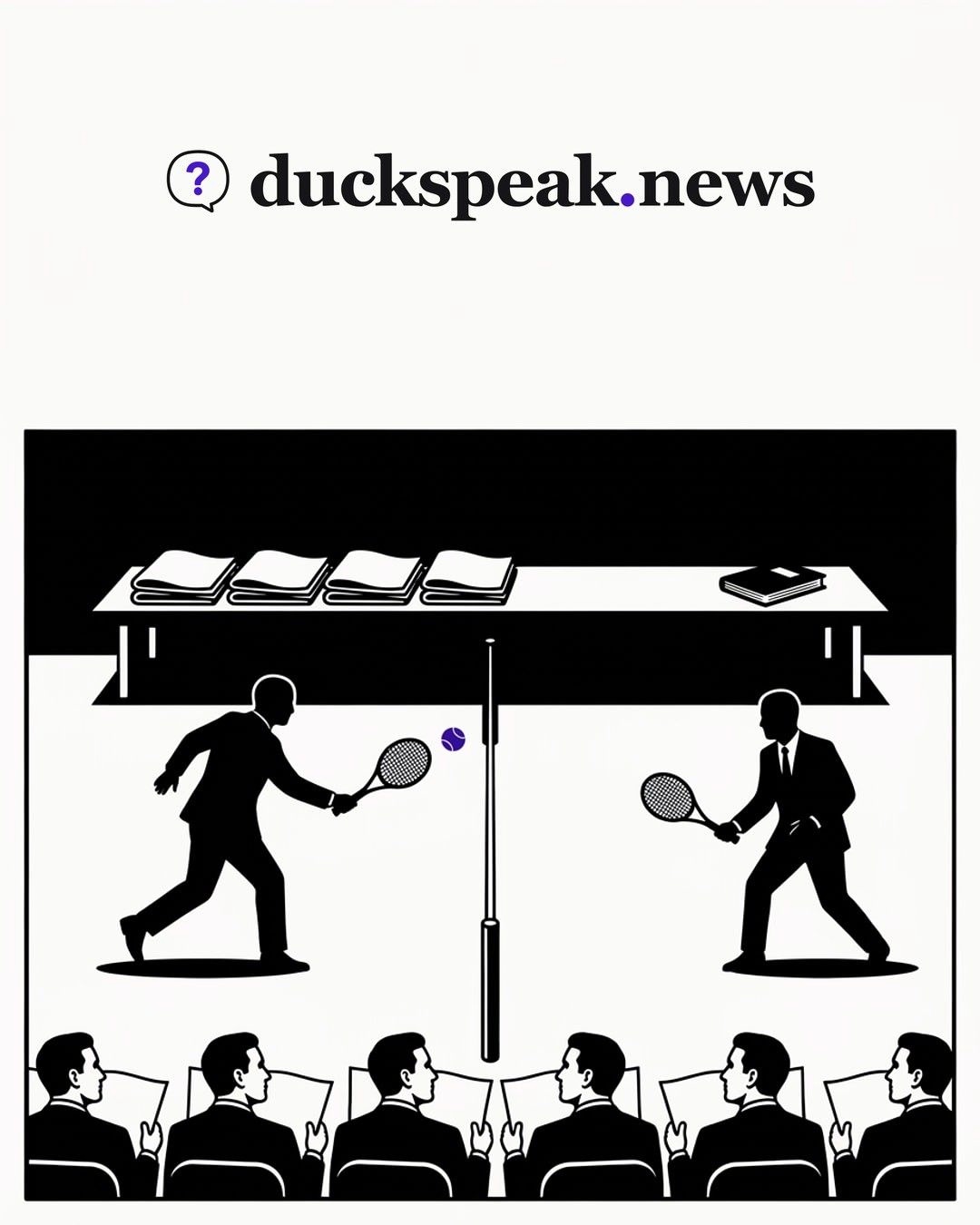
“Hits back” is a sports-page idiom. It frames the matter as an exchange between two camps, a volley with a returned serve. That is the Orwellian worry in miniature: a stock phrase that arrives pre-assembled, so that nobody has to ask what is being disputed. (Note: headline convergence is common wire-style habit and we cannot show coordination.)
The quoted line does the work, and the checking mostly doesn’t
The spokesman’s statement is reproduced near-verbatim in all four pieces: “the facts speak for themselves” [1][2][3][4]. Yet in most of them the facts are not then allowed to speak. Hegseth’s claim was that “maybe five” countries contributed and “closer to one or two” were “involved in kinetic operations” [1][2][4]. Only the Independent and the Guardian offer any numbers that test it. The Independent cites Help for Heroes: more than 1,100 non-US coalition fighters died, and the UK had the second-highest military death toll [2]. The Guardian notes that personnel from “more than 30 nations” died, including 457 from the UK [3]. The Mirror adds a Polish minister’s claim of 44 Polish dead in Ghazni province [4], which is a quote from a politician, not an independent count.
GB News gives the 457 figure and little else [1]. No outlet here sets out what “kinetic operations” means, or whether national caveats on deployments differed. We cannot say from these articles whether Hegseth’s claim has any partial basis; the point is that readers are told it is “wrong” rather than shown where it fails. The figures these outlets give are death tolls, which answer “did they sacrifice?” more than “did they fight?”. These are related questions, but not the same one.
The joke that got trimmed
Hegseth’s “I Saw Americans Fighting” gag and his follow-up, “it’s demoralising when you feel like it’s not burden-sharing, it’s actually a burden” [3][4], appear in the Guardian and Mirror in full. The Independent includes the joke but not the burden line [2]. GB News includes neither [1]. The omitted line is arguably the real thesis: an argument about cost-sharing inside Nato, not only a slight. Leaving it out turns a policy grievance into a pure insult, which suits the “hits back” template.
Newspeak by repetition
Trump’s earlier remark and climbdown get recycled as backdrop in all four. The Independent calls his earlier claims “false” [2]; GB News says he was “forced to climb down” [1]; the Mirror calls his post “gushing” and says he “rowed back” [4]. Trump’s own words, “greatest of all warriors” [1][4], are quoted warmly and almost without comment, even though the same sentence structure (“second to none (except for the USA!)”) [4] is itself a ranking of sacrifice. The pattern is insult, outrage, flattery, repeat; the cycle becomes the story. Huxley’s version: outrage and soothing alternate, and the underlying question goes undisturbed.
Small tells
- GB News leads with “Andy Burnham has hit back” [1] while its own text then credits “Downing Street” and the PM’s spokesman. The Mirror writes “Andy Burnham’s No10” [4]. Personalising a spokesman’s words as the prime minister’s is a framing choice; the sources show only that a spokesman spoke.
- The Guardian alone ties the response to Ukraine and Russia policy [3], a wider context the others omit.
What a reader would need instead
4 checks to run on the next story like this one.
-
The specific claim tested: which nations had combat roles in ISAF, under what restrictions, and where. The coalition’s own casualty records (the Independent points to Help for Heroes [2]) are a starting place; a military historian or Nato’s own ISAF records would be better, though they are not in these sources.
Gap in the coverage
-
Hegseth’s full “burden” argument, quoted rather than trimmed.
Gap in the coverage
-
A plain separation between “they died” (undisputed) and “they were in combat roles” (the actual claim).
Gap in the coverage
-
Fewer verbs borrowed from boxing.
Gap in the coverage