

The headline’s two quotation marks
The Independent’s headline puts one word in quotation marks: “scare quotes” around ‘squatter’Scare quotesScare quotes are quotation marks placed around a word an outlet won't stand behind, so it can print the word anyway. [1]. Then the first sentence does the opposite with a different word: “harassment” [1] is the one in quotes, while “squatter” appears bare in the body’s opening line: “A squatter living in an iconic London music venue has won a damages payout” [1].
Look at what each choice does. Quotation marks signal that the outlet will not vouch for a word. Here the headline hedges “squatter” but the lede states it as fact. Meanwhile “harassment”, the very thing a judge found proven, is the word held at arm’s length. A reader skimming the lede learns that a squatter claimed harassment, which is a smaller story than the one the court actually decided: an owner was found to have acted in a way the judge called “unacceptable and oppressive” [1].
The Independent has since changed the headline. The version updated at 14:41 BST on 16 October reads: “London man wins payout after landlord demolished his flat while he was asleep inside” [1]. The scare quotes are gone, but the opening line, “harassment” in quotation marks and all, is unchanged, and “payout” remains. The new wording also leans the other way: “landlord” and “his flat” imply a tenancy the judge found did not exist [1]. This critique quotes the headline as first published, four hours earlier.
What the judge actually said
The label is not simply invented. The judge said Saia was “effectively a squatter” and “technically a trespasser” [1]. But the same sentence continues: that status “did not mean he could go and take the extreme steps which I find were taken” [1]. The judge’s use of the word is a concession that precedes a rebuke. The headline keeps the concession and moves the rebuke into a subordinate clause.
There is also a tension the article never resolves. It says Saia had “formerly stayed in the condemned building with permission as a property guardian” [1], then calls him a squatter. It does not say when the permission ended, or why the judge concluded he was not a legal tenant. The label therefore arrives without the facts a reader would need to test it. The article is also thin on the other side: it reports that Laly “denied any acts of harassment” [1], but not what he said about why the roof was coming off.
A mixed ruling, told as a payout
The headline says “Court payout”, and the lede says Saia “won a damages payout” [1]. The rest of the article is more mixed. The judge found harassment twice: once for the roof removal, and again for “briefly cutting off water to his flat” [1]. But he dismissed the WiFi and boarding-up claims, found no breach of the Protection from Eviction Act (under which, the article says, “the bulk of his damages claim was made”), and awarded £2,000 against a claim of up to £60,000 [1]. The article gives no explanation for the gap beyond that list. That is not a distortion, but a reader who stops at the headline gets “payout” and “squatter” together, an invitation to feel either outrage or ironic satisfaction. Neither is what the judgment reports.
Texture over context
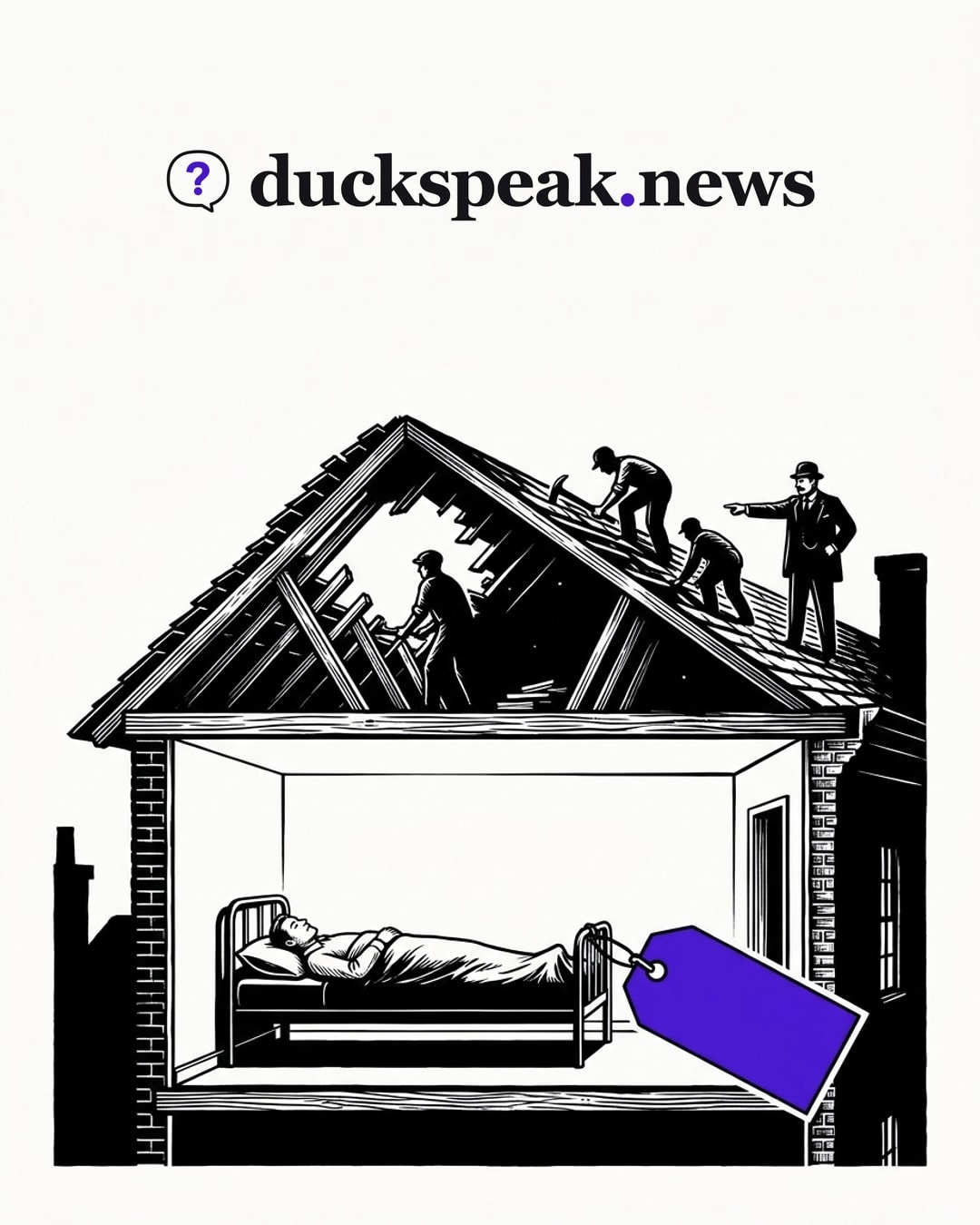
The piece leads with “iconic” and a roll call of acts (The Pogues, Happy Mondays, Desmond Dekker) [1], plus the image of a man asleep as the ceiling opened. Those details are real and vivid, but they carry emotion rather than explanation. The article does not say who condemned the building or why, whether any safety or planning order applied, what is planned for the site, or whether Laly will appeal. It says only that the building was “finally fully demolished 2024” [1]. Those omissions matter because the defence argument, that the owner had a “licence” to enter [1], cannot be weighed without them. This is a reading of what is absent from one report; other coverage may fill these gaps.
What a reader would need instead
5 checks to run on the next story like this one.
-
A headline that names the finding: a judge ruled the owner harassed an occupant by starting demolition while he was inside.
-
The word “squatter” attributed to the judge’s own phrasing (“effectively”) rather than asserted in the outlet’s voice.
-
The basis for the non-tenant finding and the end of the guardian arrangement.
Gap in the coverage
-
Who condemned the building, and whether anything required the roof to come down.
Gap in the coverage
-
Why £2,000 rather than the sum claimed, and whether an appeal is expected.
Gap in the coverage