

A slogan that arrived pre-written
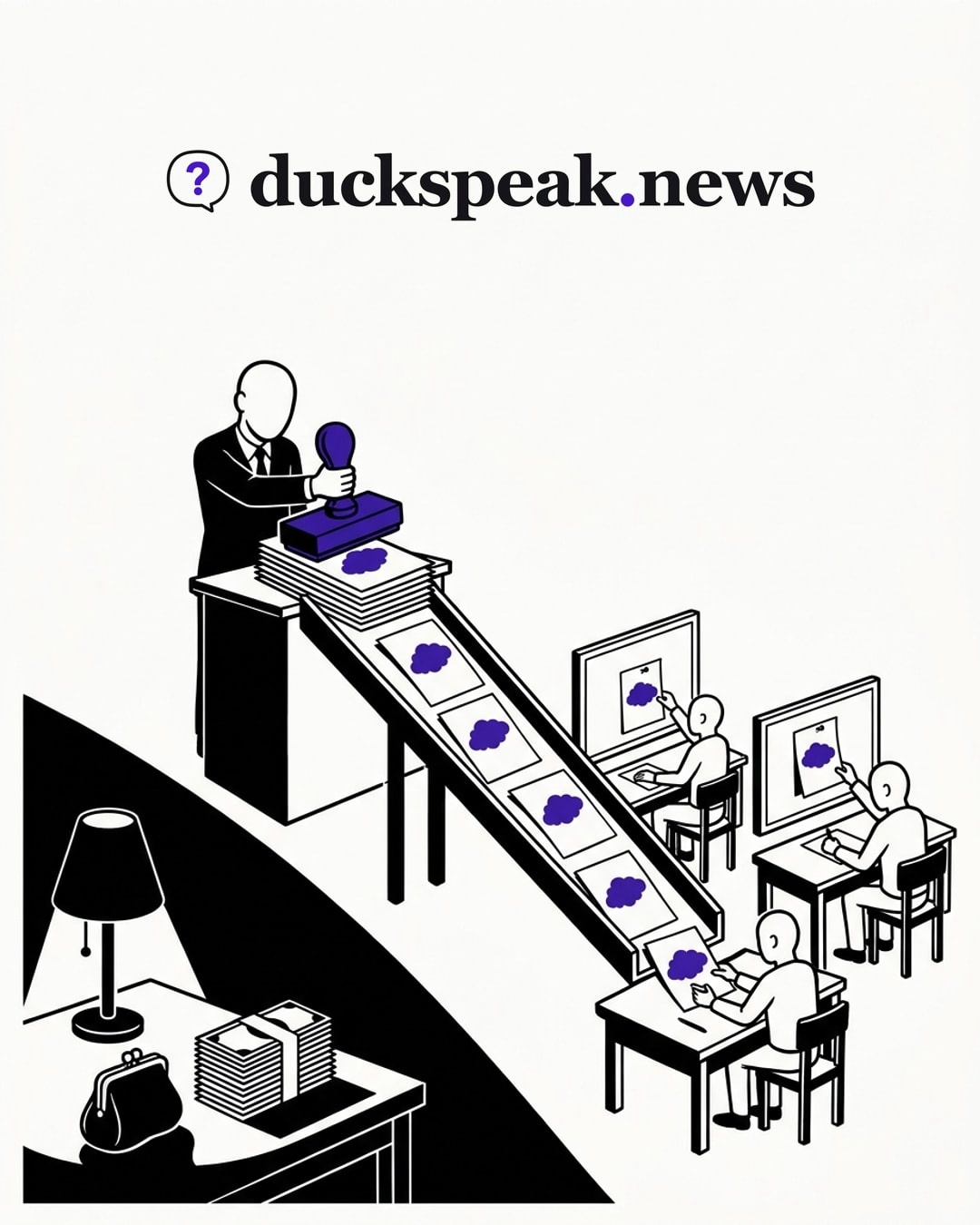
Healey’s Commons statement ends on a refrain: “breathing space now, fresh hope for the future, delivered to the British people by this Labour Government” [7]. The Treasury’s Budget document opens the same way: “It is a Budget that will deliver breathing space today, and fresh hope for the future” [8]. The phrase appears again and again in the transcript.
Now the coverage. The Guardian reports that Healey explained his choices “to give households some ‘breathing space’” [4]. The BBC’s paper review relays the Mirror’s “breathing space” measures [2]. GB News writes that he was “attempting to provide “breathing space”Euphemism launderingEuphemism laundering is official or institutional vocabulary repeated across coverage until it stops sounding like a chosen frame and starts sounding like plain description. for the public amid the rising prices exacerbated by the Iran war” [6].
This is euphemism laundering in its mild form. The quotation marks do show whose phrase it is. But a phrase repeated across outlets starts to read as description, and nobody stops to ask what it describes. The Chancellor set the bar himself: people look to government “not to solve all their problems but to give them a bit of breathing space” [7]. A slogan that promises almost nothing is hard to fail.
The figures in the same coverage test it. The Resolution Foundation says typical annual energy bills will reach £1,750 after government support in 2026-27, against £1,685 during the 2022-23 shock [4]. The Independent adds the foundation’s expectation that typical disposable income falls by £1,050 over the next two to three years [5]. Those two numbers sit in the same Guardian and Independent reports as the slogan. If you can’t say what “breathing space” measures, you can’t tell whether it was delivered.
A similar move is the weather. Healey says: “Analysts like to speak of economic headwinds, but what we face today are global economic storms” [7]. The Guardian’s reader Q&A repeats “global economic storms” [3], and the BBC review relays it [2]. A storm has no one in it. Yet Healey himself called the cause a war (“We did not want this war”) and said the OBR names it a key driver [7]. This is not a distortion, since the transcript supports the causal claim. But a reader only meets the word “storms” in most of the coverage, and it asks them to expect the problem to pass.
Two nouns for one tax
The same Budget measure gets different names depending on who is speaking. In the transcript, banks “will pay an extra 3% on the bank surcharge”, time limited, “starting in January and ending 15 months later” [7]. The Treasury calls it a “temporary additional contribution” [8]. The Guardian’s Q&A calls it a “windfall tax on banks” [3]. The Times, as relayed by the BBC, says Healey “has started a tax raid on landlords, savers and banks to fund handouts for 20 million households” [2], and the Telegraph speaks of a “£4.3bn tax raid” [2].
“Contribution” and “raid” are both chosen. One makes the tax sound voluntary; the other makes it sound like theft. A reader who sees only one of them has been handed a verdict. The plain description is in the transcript: a 3% surcharge increase for 15 months.
When the headline does the quoting
GB News headlines its story: Healey “condemned over ‘shameful’ £2billion defence raidLoaded-vocabulary adoptionLoaded-vocabulary adoption is when a charged word coined by one side of a dispute ('raid', 'radical', 'ballooning') moves out of its quotation marks and into the outlet's own narration, so the argument is made before the evidence.” [6]. “Shameful” is in quotation marks, and the body attributes it to Liberal Democrat spokesman James MacCleary [6]. “Raid” is not in quotation marks. That is loaded-vocabulary adoption: a charged word is placed in the outlet’s own voice before the evidence appears.
The opening sentence then says Healey made a decision to “slash £2billion from the Ministry of Defence’s budget”Headline asserts, body hedgesThe mother pattern behind scare quotes, modal deletion, and the commitment-free statement: a headline states a claim as settled fact while the article underneath it quietly hedges, denies, or contradicts it. [6]. This is the headline asserts, body hedges pattern. Further down, the article gives the numbers: £72.8bn in 2027/28 and £75.5bn in 2028/29, against Rachel Reeves’s £73.8bn and £76.5bn [6]. That is £1bn less in each year, compared with an earlier plan, not with what is spent today. The article never says whether “£2billion” is two years added together. It also says the Tories “branded” the change a “cut” [6], so the word is a party’s label, and the headline has adopted it.
The official record does not settle the question. Healey says the defence budget is “£14 billion higher” than the Conservatives’ last year, that the Defence Investment Plan is fully funded “through capital reprioritisation across Whitehall”, and that the route to 3% of GDP will come at next year’s spending review [7]. The transcript contains no £72.8bn figure, so GB News’s numbers can’t be checked against it. What we can say is that a £1bn-a-year gap against a previous plan is a different claim from “slash”, and the reader is given only the second.
A question with its answer inside
The Guardian’s Q&A prompt asks whether the Budget is a “break with the past”, or whether “the lower-than-expected tax on banks” is “just another example of tinkering around the edges by another Chancellor fenced in by self-imposed fiscal rulesPresuppositionPresupposition embeds a huge, unstated fact as an assumed background detail instead of reporting it, so the question of how we got here becomes structurally impossible to ask.” [3]. This is presupposition. The question takes for granted that the bank tax is lower than expected (by whose expectation?), that the rules are self-imposed, and that they fence the Chancellor in. The only alternative offered is a “break with the past”. A reader who accepts the question has accepted the diagnosis. This is a prompt for readers’ questions, so it is looser than a news report. But it frames what those questions will be.
A small insinuation
The Independent calls the Resolution Foundation’s verdict “particularly embarrassing” because pensions minister Torsten Bell once ran it [5]. That judgement is the outlet’s, with no one quoted as embarrassed. The foundation’s own words stand without it, and the article never says whether Bell had any say over its analysis.
What a reader would need instead
5 checks to run on the next story like this one.
-
A definition. What is “breathing space” in pounds, for whom, and until when? The £100 payment is a £2.6 billion scheme for 20 million households in council tax bands A to D, and VAT and fuel duty cuts run to July [7].
-
Both labels for the bank measure, or neither: “a 3% surcharge increase, for 15 months.”
-
Baselines for defence. Compared with what, in which year, and cumulative or annual? The Defence Investment Plan itself is the document to read.
-
A plain admission of what isn’t known. The BBC’s under-25s explainer does this: the entrepreneurs allowance has details that are “thin at the moment” [1].
Gap in the coverage
-
Loaded verbs kept inside quotation marks, with the person who said them named.