

A serious fact, filed under “rivalry”
According to Channel 12, the prime minister’s chief of staff steered the police toward a “source de renseignement” (intelligence source) who was in fact a former employee of Netanyahu’s office. On that basis, three activists from an Arab party were arrested on election day itself, then released when the police judged the information “infondées” (unfounded) [1]. If these facts are confirmed, people close to the head of government used the police against opposition activists while the vote was under way.
Yet that is not what organizes the three French articles. Their headlines start from one man’s opinion: Eisenkot “estime” (believes) that Netanyahu can no longer govern [1], or that he is “une menace pour la démocratie” (a threat to democracy) [3]. France 24 opens with “Tensions à la tête d’Israël” (Tensions at the top in Israel) [1]. At RFI, the report comes after the Knesset’s schedule for the week and serves to explain a disagreement: “Le fossé, déjà profond, s’est encore un peu plus creusé après la diffusion d’un reportage” (The rift, already deep, widened a little further after a report was broadcast) [2]. The fact itself, “trois militants de Raam ont été arrêtés le jour du scrutinBuried ledeA buried lede is the fact that should have organized the whole story, relegated instead to the final sentence or hidden inside someone else's quote.” (three Raam activists were arrested on election day) [2], only turns up in the fourth paragraph. This is a buried lede: the reader first learns that the negotiations are getting tense, and only afterwards that an arrest may have been set up against activists on election day. To spot one, ask which fact should have made the headline, then find the paragraph where it appears.
The “duel” instead of the substance
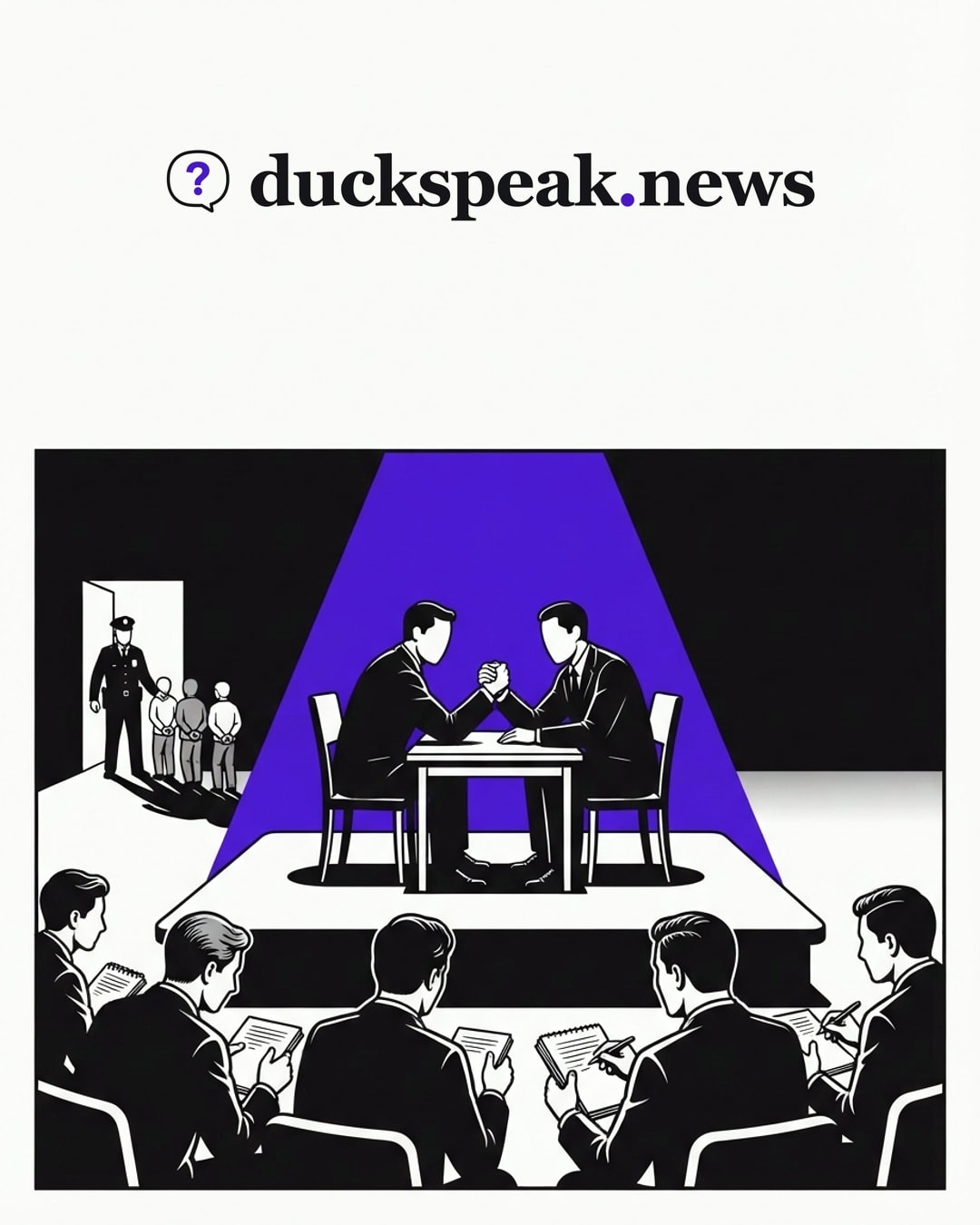
RFI takes the sports narrative furthest. Its headline shows the Eisenkot camp that “passe à l’offensive” (goes on the offensive). The text announces “Le duel entre le camp Eisenkot et le camp NetanyahuHorse-race framingHorse-race framing reports a policy fight as a contest, with battles, winners, flinches and bounces, so the reader learns who is ahead and never what the deal, the budget or the plan actually contains.” (The duel between the Eisenkot camp and the Netanyahu camp), then “Un véritable bras de fer institutionnel” (A genuine institutional tug-of-war) and “la véritable épreuve de vérité” (the real moment of truth) [2]. This vocabulary was already there the day before, with “le bras de fer Eisenkot-Netanyahu se poursuit” (the Eisenkot-Netanyahu tug-of-war continues) and “La bataille pour bâtir une majorité se poursuit” (The battle to build a majority continues) [7]. This is horse-race framing: the reader knows who is attacking and who is falling back, but not what is at stake. Yet the stakes fit in a single clause: “l’abrogation de la réforme judiciaire sera lancée dès mercredi” (the repeal of the judicial reform will be launched as early as Wednesday) if the bloc wins the speakership [2]. Nobody explains what this reform contains, or what repealing it would change.
The Channel 12 report slots into this pattern as one more move. The article ends on “deux camps toujours moins en phaseBothsidesismBothsidesism (symmetry construction) is grammar that treats an aggressor and a defender as equal, interchangeable participants in a shared event, turning an invasion into weather.” (two camps ever further out of step) [2]. This phrase is bothsidesism: it puts a precise accusation (that one camp’s entourage set the police on activists of a third party) on the same footing as the other camp’s reaction. The reader comes away with a quarrel between two men drifting apart and loses sight of the fact that the main target, according to Channel 12, is neither Eisenkot nor Netanyahu, but Raam. To spot it, look for sentences in which “both camps” share an event that only one of them is accused of causing.
Who made the arrests, and who was arrested?
All three articles write that the activists “ont été arrêtésAgentless passiveThe agentless passive is a sentence built so the action happens with no one doing it.” (were arrested) [1] [3], then that they “ont été libérés” (were released) [1]. This agentless passive leaves part of the story in the dark. No article says who decided to arrest three people on election day on the strength of a single source, whether the police chief mentioned by Channel 12 stepped in personally, or how long the activists were held (before or after the polls closed). The police appear only once, when they “a constaté” (found) that the information was false [1], which casts them as the ones who corrected the error rather than the ones who acted. And neither the three activists nor Raam are quoted: we hear from Eisenkot, Netanyahu’s office and Likud, but never from the people most directly affected.
The agentless passive is a sentence built so the action happens with no one doing it.
France 24 also reports Likud’s retort without comment: “Est-ce le chef de cabinet qui a placé les enveloppes remplies d’argent liquide chez les suspects ?” (Was it the chief of staff who planted the envelopes stuffed with cash in the suspects’ homes?) [1]. The retort assumes that cash was found at the activists’ homes. Nothing in the article confirms this, and it sits poorly with their release on the grounds that the information was “infondées” (unfounded). The article never raises the question.
One wire story, three bylines
The three texts share entire sentences. France 24 has “Sur la base des allégations de cette source, trois militants de Raam ont été arrêtés le jour du scrutin, soupçonnés de vouloir acheter des voix, le camp Netanyahu accusant dans la foulée les partis arabes de fraude électoraleChurnalismChurnalism is a press release, wire feed, or one outlet's unsourced reporting republished under several bylines and read by the public as independent confirmation.” (On the basis of this source’s allegations, three Raam activists were arrested on election day on suspicion of trying to buy votes, with the Netanyahu camp promptly accusing the Arab parties of electoral fraud) [1], France Info has the same [3], and RFI has “et le camp Netanyahu a accusé dans la foulée les partis arabes de fraude électorale” (and the Netanyahu camp promptly accused the Arab parties of electoral fraud) [2]. The same goes for “rempli son devoir de citoyen” (fulfilled his duty as a citizen) and for the “concrète, directe et immédiate” (concrete, direct and immediate) threat [1] [2] [3]. This is churnalism: RFI’s byline reads “Par : RFI” (By: RFI), and none of the three names the agency the copy came from. Three public broadcasters each appear to have confirmed the story, when everything rests on a single Channel 12 report that none of them says it has checked.
The copy-and-paste also erases context these same newsrooms had published. On 30 October, France 24 quoted the Election Commission: “certaines informations qui ont circulé sont entièrement infondées” (some of the information that has circulated is entirely unfounded) [5]. On 8 November, France Info wrote that checks had found “aucune irrégularité” (no irregularities) [6]. Now the “fraude électorale” (electoral fraud) alleged by the Netanyahu camp comes back without that reminder [1] [3], even though the Channel 12 report could show where some of those accusations came from. None of the late-October articles collected here mentioned these election-day arrests.
One quote, two dates
One uncertainty remains. According to the three French outlets, Eisenkot said on Sunday, after the report aired, that Netanyahu “ne pouvait pas rester à la tête du gouvernement une minute de plus” (could not remain head of government a minute longer) [1]. Simon Tisdall’s opinion piece quotes a nearly identical sentence, “unfit to continue in office for even one more minute” [4], but places it after the Knesset’s swearing-in session the week before. Eisenkot may have used the line twice. The articles don’t say so, and the reader cannot tell whether this statement, presented as a reaction to the report, is really about it.
What a reader would need instead
6 checks to run on the next story like this one.
-
The fact up front. The headline should state that, according to Channel 12, the prime minister’s entourage sent the police after Raam activists on election day, and only then give Eisenkot’s reaction [2].
-
Who made the arrests. Readers need to know which service arrested the three activists, on whose orders, and how long they were held [1] [3].
-
The voices of those targeted. Raam and the three activists appear in none of the articles, even though the accusation concerns them first and foremost [1] [2] [3].
-
The wire’s source and whether it was checked. The newsrooms should name the agency whose copy they used and say whether they verified the Channel 12 report, instead of publishing the same text under three bylines [1] [2] [3].
-
The substance of the parliamentary week. Coverage should explain what the judicial reform that the “bloc du changement” (change bloc) wants to repeal actually contains, rather than counting the rounds of a “bras de fer” (tug-of-war) [2].
-
A reminder of the Election Commission’s findings. The commission had found some reports of fraud “entièrement infondées” (entirely unfounded) [5]. That reminder should accompany every mention of the Netanyahu camp’s accusations [1] [3].
Gap in the coverage