

Both outlets’ own copy records the event plainly enough. Three men forced their way into a Solihull home, beat a man in “the face, head and ribs with hammers” for 45 minutes, held a pillow over the face of his wife, seven months pregnant, while she screamed “I can’t breathe,” and threatened to “stab your wife in the stomach and kill your baby” unless he transferred his savings [1]. Here is how two outlets headlined that event: “Crypto thieves attack man in home and threaten to kill pregnant wife’s baby in ‘horrific’ robbery” [1]; “Crypto thieves attacked man and threatened to kill his pregnant wife’s baby during heist” [2].
The coverage is essentially one interview distributed through two outlets. The Independent says so in the body (“the man told the BBC” [2]) and adds real reporting of its own: the date, the Smith’s Wood location, the black BMW X3, the knife threat West Midlands Police confirmed [2]. But the headline frame arrives pre-made and is inherited intact: what traveled between outlets was not just the facts but the taxonomy.
The noun that does the work
Both headlines open with the same agent noun: “Crypto thieves” [1][2]. Thieves. For men who beat a man’s face, head and ribs with hammers [1] and suffocated a pregnant woman with a pillow [1], “thieves” is close to the softest noun available. Notice where the violence lives in both pieces: inside the victims’ quotation marks. “He’s literally suffocating her on the sofa” [1][2] is the husband’s sentence. The house vocabulary, the words the outlets choose themselves, is inventory: robbery, theft, transfer, heist. The BBC even quarantines the one adjective the couple chose, “horrific,” inside quotation marks in its own headline [1] while “robbery” stands unmarked beneath it. That is attribution convention, to be fair; the cumulative effect is still that the moral content of the event is only ever spoken by victims, never by an outlet.
The ‘heist’ and the headline layer
The Independent’s headline ends “during heist” [2]. A heist is a genre word: planned, clever, glamorous, low body count. The paper’s own first sentence knows better: “A hammer-wielding masked gang” [2]. The body carries the violence; the headline carries the frame; and the headline is the layer that travels into shares, aggregators, and search results. This may be a sub-editor’s genre habit rather than a decision to soften, and we flag it as interpretation; the result is the same either way. Threats to stab a pregnant woman become a procedural step within a heist, an occupational hazard of the genre.
Filed under Tech Decoded
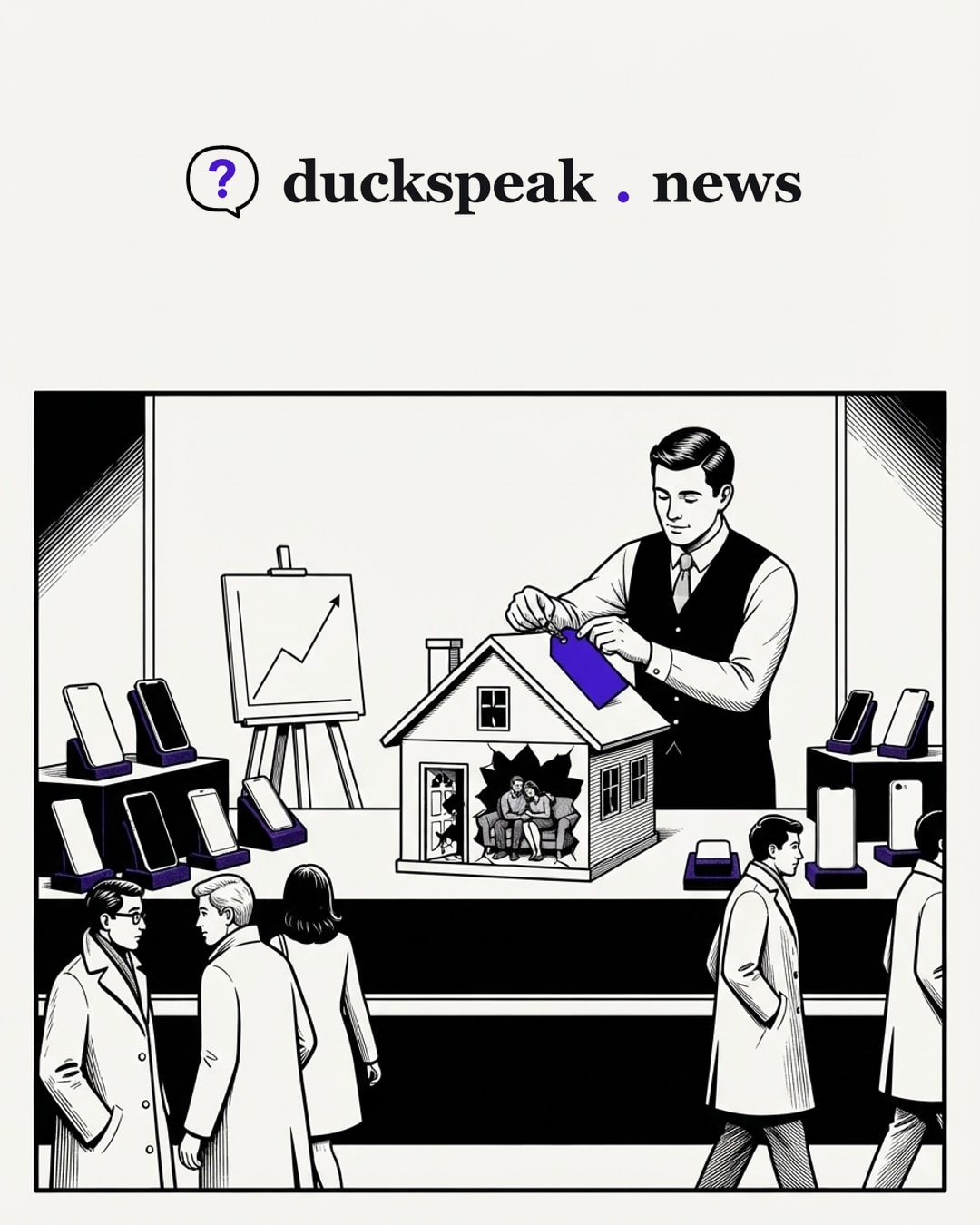
The BBC runs this as tech coverage, and the page furniture proves it. The piece closes with “Sign up for our Tech Decoded newsletter to follow the world’s top tech stories and trends” [1], with “How crypto criminals stole $700 million from people - often using age-old tricks” [1] sitting in the same footer as related reading. A woman suffocated on her own sofa is filed beside a $700m roundup. The genre is audible in the grammar, too. The story carries a forecast, that 2026 is “likely to become the single-worst year for violent crypto attacks on record” [1], and a travel advisory: “The US, Brazil, and Thailand are hotspots” [1]. A crime story with a forecast is a tech story. Crime reporting does not project annual totals; market reporting does. This is the Huxley mechanism at its cleanest: the atrocity is metabolized as trend content, and the exit ramp is a subscription.
The ‘wrench attack’ and the age-old trick
“Experts say it is one of a growing type of violent theft known as a ‘wrench attack’ targeting cryptocurrency investors” [1]. The term arrives without origin or explanation and performs the filing operation in miniature: a home invasion with hammers becomes a subcategory of crypto crime. Note the tension inside the BBC’s own page: the related link concedes the tricks are “age-old” [1]. Forcing a victim to hand over assets under threat of violence predates the asset class by a long way; what is new is the label, and the label is what makes this a tech story rather than a crime story.
The clause that should have been the story
Buried in the trend paragraph is the most institutionally implicating fact in either piece: France leads the world in these attacks “as a result of a data breach at a tax office that has apparently allowed wealthy crypto holders to be located” [1]. A state institution lost data that let gangs locate people to torture them. The BBC gives this a subordinate clause and a hedge, “apparently”; the Independent omits it entirely [2]. Meanwhile the framing that implicates a technology gets paragraphs and a $30m figure [1]. That is priority inversion: the fact pointing at an institution is hedged and buried; the fact pointing at an asset class is headlined.
The UK version of the question goes unasked. The BBC observes that “the attackers appeared to know he owned cryptocurrency” [1]. The Independent reports this is believed to have been “a planned and targeted attack” [2]. How did they know? Both halves of the question are sitting in the copy, and neither piece connects them. That mechanism, not the volatility, is the systemic risk.
A sourcing note: the “experts” are “crypto investigators at Chainalysis” [1], a private blockchain analytics firm, whose report argues holders are exposed “without any institutional gatekeeper standing in the way” [1]. The quote is relayed accurately and without counterpoint. Flagged as interpretation: the claim that the missing bank is the vulnerability is a position in a live argument about self-custody, not a neutral finding, and it arrives wearing the costume of expertise.
The amateur investor and the ‘risks’
Both pieces identify the man as “an amateur investor in crypto coins” [1][2]. The gang also took his Rolex watches [1][2], but no headline calls him a watch collector. The asset class becomes the man’s identity, and the crime becomes a downside of his portfolio choice. The BBC’s closing biographical beat: “Now he has lost everything and is looking to get back to his traditional job” [1]. “Everything” is the crypto. The wife who was suffocated and the baby who survived [1] are not in the closing frame. Both outlets then end on the victim’s own adoption of the risk vocabulary: “People need to understand these risks are real” [1][2]. “Risks” is the word doing the heaviest lifting in the coverage. It converts a crime into a market downside and quietly relocates responsibility to the person who chose to hold the asset. That is Newspeak’s core operation, performed with the victim’s own voice as the delivery mechanism.
What a reader would need instead
- The police record, not just the reward. The last factual word on the investigation is “Police have yet to identify the attackers” [1]. What category is West Midlands Police investigating under? The Independent’s only police detail is that “the female victim was also threatened with a knife” [2]. The force can be asked directly.
- The targeting mechanism. How attackers locate holders is the systemic question. The France tax breach [1] gestures at it and is dropped; the UK question is never posed. This belongs at the center of the story, not in a clause.
- The sourcing, labeled. Chainalysis is a company that sells blockchain analytics, not a disinterested “expert” [1]. Its report is public; readers can read it and should know its authorship.
- The baseline. Violence to force asset transfers is old; the BBC’s own related link says “age-old tricks” [1]. A base rate for robbery under duress would let a reader judge the “growing type” claim [1] rather than take it on trend.
- The victims’ vocabulary, unquarantined. When the only emotionally loaded word in a headline sits in quotation marks [1] while “heist” [2] rides bare, readers should ask whose words are carrying the event and whose are filing it.