

The phrase that did the work
When the Greater Manchester Combined Authority (GMCA) published a statement on Andy Burnham’s dealings with Manchester City, it contained a sentence built to be unfalsifiable: “in his capacity as mayor, he was a guest of Manchester City at home matches on a small number of occasions” [1]. The Independent quotes the same line from a GMCA spokesman [2].
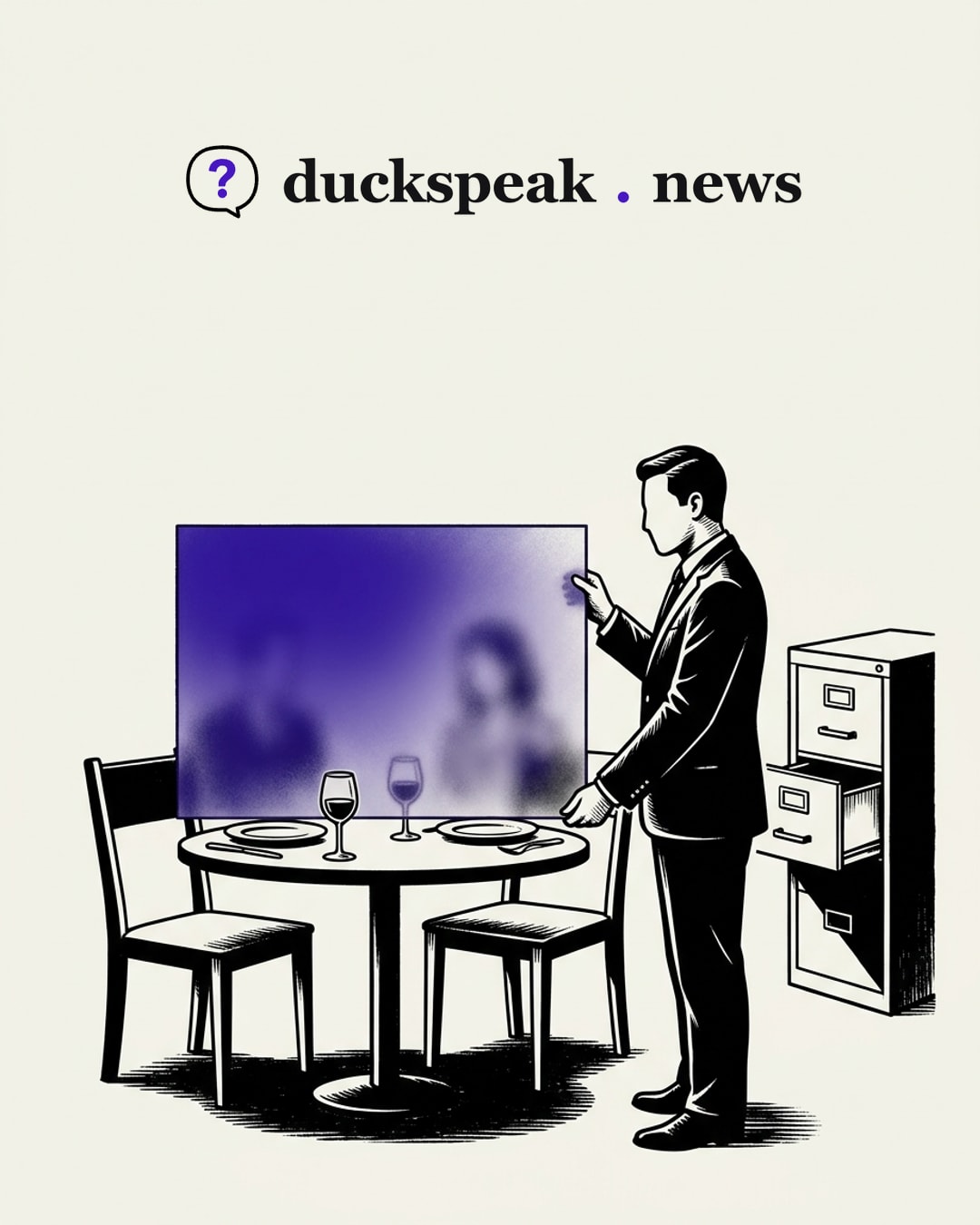
What the sentence leaves out is what BBC News says a previous GMCA register of declarations contained: a “dinner with [then-Manchester City Council leader] Richard Leese and Chair of Man City” at an Everton match in August 2017, valued at £300, and a “dinner with the Chairman at the Man City/Man Utd derby at the Etihad” in April 2018, valued at approximately £699 [1]. The BBC notes the statement “did not specify that this referred to” those two dinners [1].
This is a small-scale version of what Orwell described in “Politics and the English Language”: vocabulary chosen not to mislead exactly, but to “give an appearance of solidity to pure wind.” “A small number of occasions” is technically compatible with two. It is also compatible with nearly anything else. The phrase carries no information, but it has the grammar of disclosure.
Declared, then deleted
The defence offered is procedural. Burnham’s press secretary said the PM’s attendance and hospitality “was declared in the usual way” [2]. Downing Street likewise defended the dinners as hospitality at home games that had been declared, “rather than separate meetings with the club chairman” [1].
That may be true, and nothing in the sources contradicts it. But note the distinction being drawn: a dinner with the chairman is reclassified as “hospitality,” a category that sounds passive, like weather. The BBC’s own register quote describes it as a “dinner with the Chairman” [1]. The label changes depending on who is speaking.
Then there is the register itself. Both outlets report it has been deleted from the GMCA website [1][2]. The BBC says it understands it is the authority’s policy to publish only entries from the current mayoral term, but also notes the website carries entries dating back to 2022 while the current term began in 2024 [1]. The Independent says only that declarations are kept online during a mayoral term, “it is understood” [2]. Asked about the deletion, the press secretary said the website was “a matter for the authority” [2].
We should be careful here. The sources do not show the deletion was motivated by anything, and the BBC’s reporting that a retention policy exists is a plausible innocent explanation. What they do show is an unexplained inconsistency, which the BBC has put to the GMCA without (so far, in the text we have) a reply [1]. This is a question, not a finding.
Responsibility passed like a parcel
Note the choreography of accountability. The press secretary points to the GMCA statement; the website is the GMCA’s business; the GMCA’s statement points back to declarations “in the usual way.” Each node in the chain is individually defensible, and together they form a loop where no one has to answer for the gap. Shadow sports minister Louie French says Burnham “cannot hide behind the GMCA” [2], which is a fair description of the structure, though it is also, of course, a partisan line from an opposition frontbencher, and both outlets quote him at length without testing it.
Burnham himself told a podcast he would “put out there everything that I have done,” and that he “only had one significant meeting, actually, and that was in 2021” [1]. “Significant” is another quiet filter. Who decides what counts? The dinners fall outside it by definition.
Where the coverage helps, and where it doesn’t
Credit where due: the BBC does the real work, quoting the register entries, values and dates, and flagging the retention-policy inconsistency [1]. The Independent’s headline, though, adopts the opposition’s words: Burnham “told to ‘come clean’” [2]. The verb frame casts the story as partisan pressure rather than as a documentary gap that readers could verify. The piece also hedges the central fact with “reportedly” and “it is understood,” while the BBC says it saw the register [1][2]. Both outlets credit The Sun with first reporting the deletion, according to the BBC [1], a detail the Independent does not attribute.
There is also a Huxley problem, mild but real. Both stories nest the dinners inside a larger spectacle: the “scandal-hit club” [2], the PM’s earlier remark that he’d be “really concerned” if the owners sold [1], the appeal. The outrage cycle is vivid; the £300 and £699 are small, easy to shrug at. A reader can come away feeling informed about a controversy without knowing what, exactly, was discussed at those dinners. The BBC says the published list “did not include detail on what was discussed” [1]. Nobody in either article claims to know.
What a reader would need instead
- The actual current GMCA declarations policy, in writing, and an explanation of why 2022 entries remain online while 2017 and 2018 ones do not [1].
- An archived copy or full text of the deleted register, so entries can be checked against the statement rather than characterised by journalists or politicians.
- Clarity on what “a small number of occasions” means as a count, and whether the dinners are among them.
- Whatever formal registers of ministerial interests and hospitality apply to a sitting PM, as an independent check. Neither article tells us what these show, and we have not assumed.
- Evidence of any decision or contact that followed the hospitality. The sources offer none; this piece does not suggest there was any.
The honest summary is narrower than the outrage: two declared dinners, a vague sentence that did not mention them, and a deleted web page with an unexplained policy. That is a transparency failure at most, and the sources do not establish more.