

The sentence everyone repeated
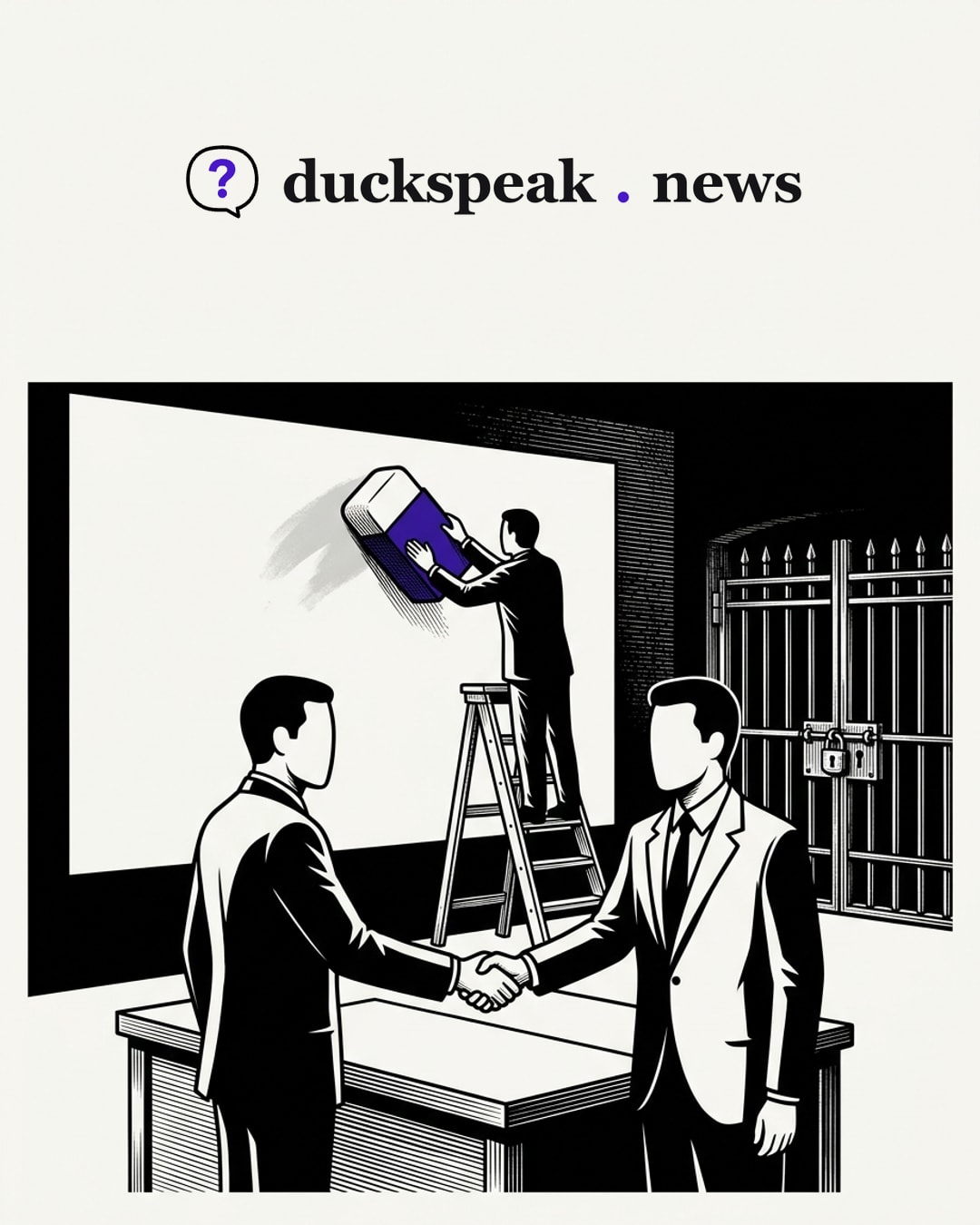
When Palantir and the Mayor’s Office for Policing and Crime (Mopac) ended their High Court fight, the joint statement offered one carefully built sentence. Mopac “recognises Palantir’s concerns that media reporting of a statement from the mayor’s spokesperson before the decision was taken could have incorrectly created the impression that an assessment of the company’s values had been a factor in that decision.” The Independent [1], ITV News [4] and The Guardian [3] all print it in full. The BBC [2] quotes the core of it and adds that Mopac “is happy to correct any contrary impression.”
Note: the evidence here is limited to four news reports. We have not seen the joint statement itself. Everything below rests on how the outlets reproduce it.
Grammar doing political work
Look at the verbs. The “impression” is something that “could have” been “incorrectly” created. That wording does not say a mistake happened. It does not say the spokesperson was wrong, or that anyone said anything untrue. It places the problem in the audience’s perception and in “media reporting.” It is a Newspeak-style construction: a possible misreading is acknowledged, so that a disputed motive can be declared never to have existed.
The Guardian supplies the context that this phrasing smooths over. Khan “has previously said Londoners only wanted to see public money being paid to companies that ‘share the values of our city’” [3]. The same report notes that Palantir works “for the Israeli military and for the Trump administration in its immigration crackdown” [3]. Palantir’s own lawsuit claimed an “unlawful veto” based on “values and ethics” [1][2]. So the “impression” was not invented by reporters. The Guardian’s own account suggests it had a source. We cannot say from these articles whether the decision was in fact based on values. Mopac denies it, and the case never reached trial. But a reader of the settlement language alone would not learn that.
Whose quote closes the story?
The Independent [1] and ITV [4] both give Tom Watson, the former Labour deputy leader who “recently joined Palantir” [1], the last substantive word. He says the mayor’s team “corrected any such impression” and that decisions “can still be made on their merits and in the public interest,” despite “extreme provocation from highly organised pressure groups” [1][4]. That is a lobbyist’s framing of a settlement, and it is printed with no rebuttal. The “pressure groups” phrase goes unexamined; neither outlet says who they are.
The Guardian does the contextual work better. It says Watson was hired a month earlier “as a full-time lobbyist” [3], and that Palantir feared that if authorities could block it over its leadership’s values, “it would undermine its ability to operate in the UK” [3]. The Independent and ITV say only that he “recently joined Palantir” [1][4]. That is accurate, but it undersells the role.
What the headlines and ledes soften
The Independent calls Palantir an “AI tech giant” and ITV a “tech giant” [1][4]. Both frame the dispute as procurement and technology. The BBC and Guardian are more precise about the outcome. The BBC notes that Mopac “has not reversed its decision” to stop the deal [2]. The Guardian notes that “no admissions of liability are made and no damages have been paid” [3]. Neither point appears in the Independent or ITV copy, which also says Palantir “is still involved in the bidding process” [1][4], as if nothing had changed.
The Met’s budget argument also arrives largely unchallenged. Commissioner Sir Mark Rowley said the system would have let the Met cut 500 jobs against a £100m shortfall this year and £125m next year [1][2][4]. The Independent and ITV pair it with the figure that officer numbers per 100,000 population were lower than at any point since 1981 [1][4]. That is relevant, but the framing quietly turns AI automation into a staffing necessity. Nobody asks what “automate intelligence analysis” means for people being investigated. The Huxleyan note here is anesthesia by efficiency: the technology is presented as a painless answer to a budget problem.
Copy, paste, repeat
The Independent and ITV pieces are near-identical in structure and wording, down to a shared typo (“his forced followed”) [1][4]. Both are plausibly built from the same agency copy, though these articles do not say so, and that is speculation on our part. The effect is the same either way: one version of the settlement, repeated, with the Khan, Mopac and Watson quotes in the same order.
What a reader would need instead
- The full joint statement, so readers can judge the “impression” wording themselves.
- The original spokesperson statement that Mopac now says was misread. The reports describe it only indirectly, and the Guardian’s “share the values of our city” line [3] shows why it matters.
- A plain statement that the settlement leaves the original decision standing [2] and that no liability was admitted [3].
- Watson’s role as a paid lobbyist stated up front, and who the “highly organised pressure groups” are.
- Independent scrutiny of the procurement rules, since Mopac’s stated ground was that the Met considered one supplier and skipped approval [1][2][3]. A procurement regulator or audit body would be the natural check, though these articles do not name one.
- The Guardian’s note that Palantir is fighting to keep a £330m NHS data contract [3], which shows what is at stake beyond one police deal.
The settlement may be exactly what it says: a legal housekeeping exercise. But when “could have incorrectly created the impression” becomes the headline lesson, the audience is being asked to unlearn what it read.