

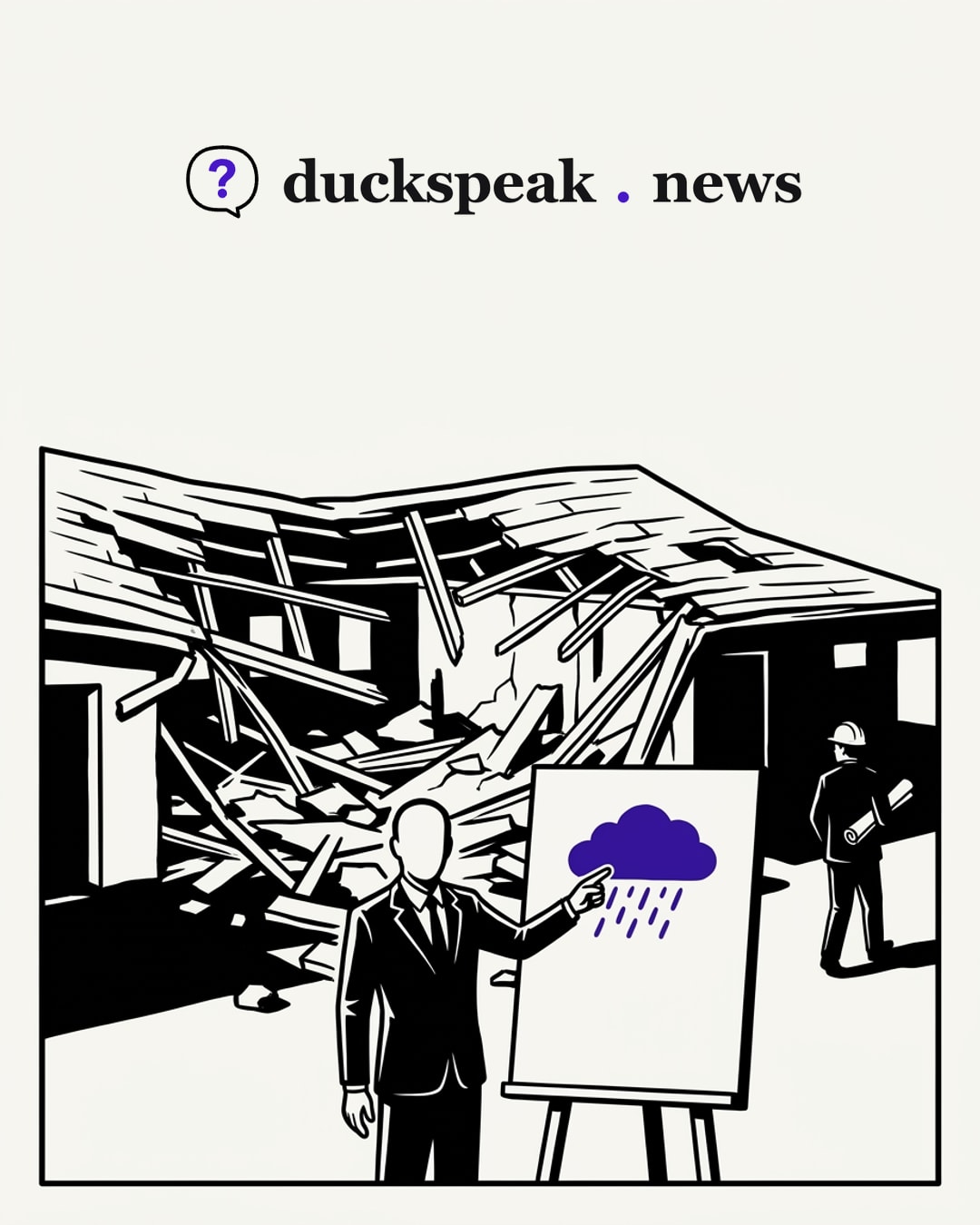
One building, five different death tolls
When a roof fell on a private school in Peshawar, the outlets agreed on the horror and disagreed on almost everything countable. BBC News reports “at least 33 pupils and a teacher” killed [1]. NPR’s headline says “at least 29,” while its own text says “at least 28 children and a female teacher” [2]. RFI and France 24 say 27 children and a teacher [3][7]. The Guardian says “at least 27 students” plus a teacher [4]. CBS says “almost 30 students and a teacher” in its headline, then “at least 29 people” in total [6].
Some of this is the ordinary fog of a breaking story, and we should not overstate it. Different hospitals reported different counts (the BBC notes Lady Reading Hospital and Naseerullah Khan Babar Memorial Hospital separately [1]). But readers are rarely told that a number is a snapshot. Several headlines state a figure as settled while the body text, or a rival outlet, contradicts it. This critique cannot say which figure is right, and the sources do not settle it.
The passive voice of structural failure
The grammar is worth noticing. Roofs “collapsed.” Buildings “caved in.” In CBS’s account “the cause of the disaster remained unclear” [6]. NPR says “the cause of the collapse was under investigation” [2]. The Guardian says “an investigation had been ordered” [4].
Yet the sources contain plenty of claims about cause. Peshawar’s police chief Mian Saeed called the structure “substandard” and “overloaded,” and said “this is a case of gross negligence” [1]. The Guardian quotes him: “Its roof was overweight with construction on a weak structure” [4]. The BBC says the school sat in a building “constructed on a temporary basis” [1]. A CBS witness said the building was “not suitable” for use as a school [6]. NPR notes the owner “had been arrested” [2]. An arrest is an active verb with a human subject, yet CBS’s “remained unclear” and the Guardian’s omission of the arrest sit beside it. The Guardian also records “no immediate comment from school officials” [4], while the BBC and NPR carry the arrest. Readers of different outlets therefore get different answers to the question of whether anyone is thought responsible.
“Frequent” as a frame
Three outlets use near identical boilerplate. RFI, France Info and France 24 say roof and building collapses “sont fréquents au Pakistan, principalement en raison de normes de sécurité insuffisantes et de matériaux de construction de mauvaise qualité” (are frequent in Pakistan, mainly because of insufficient safety standards and poor quality construction materials) [3][5][7]. NPR says “building collapses are common in Pakistan, where construction standards are often poorly enforced” and that “safety regulations are frequently ignored to reduce costs” [2].
This is the Orwellian move in miniature. A sentence that is accurate as a generalization works here as an anesthetic. “Common” and “frequent” turn a chain of specific decisions (who built, who approved, who inspected, who enrolled children) into a national weather pattern. The reader is invited to file the event under “Pakistan, building collapses” and move on. Huxley would recognize the soothing function: sorrow is acknowledged, then absorbed into a category.
The French outlets also carry the line unchanged across at least three sites, which looks like wire copy (RFI and France 24 attribute reporting to AFP) [3][7]. Repetition without verification is how a phrase hardens into a fact. We cannot tell from these sources whether the “poor enforcement” claim rests on any data.
Condolence as content
Presidential and prime ministerial statements get generous space: “profound sadness,” “heartbreaking tragedy,” “the entire nation shares the grief” [2][3][5]. NPR notes Zardari “stressed the need to ensure school buildings meet safety standards” [2]. The BBC records the Khyber Pakhtunkhwa governor ordering a safety audit of all provincial schools [1]. None of these outlets asks what happened to earlier promises.
The BBC comes closest to doing so, noting a Lahore tuition centre collapse four months earlier (14 children dead) and a hospital fire in Islamabad that killed 14 newborns, where an inquiry “found lacked fire alarms and sprinklers” [1]. That is pattern, with a named failure, rather than boilerplate. Yet the sources disagree about Lahore itself: the BBC says 14 children died [1], NPR says four schoolchildren in July [2], and RFI says “plus d’une douzaine” (more than a dozen) in June [3]. Nobody flags the discrepancy. This is a strong example of unexamined repetition, and a verifiable record would resolve it.
What a reader would need instead
- A clear label on every death toll: who gave it, when, and which hospital counted.
- Active sentences where the sources allow them: who owned the building, who permitted a third storey, who last inspected it.
- The status of the owner’s arrest and the promised inquiry, reported consistently across outlets.
- Specifics on the “frequent” collapses: how many, which building authority is responsible, and whether the earlier promised audits happened. We could not find that in these sources, so any reporter should check provincial building control records and prior inquiry reports.
- Reconciled figures for the Lahore collapse, since the sources give three different accounts.