

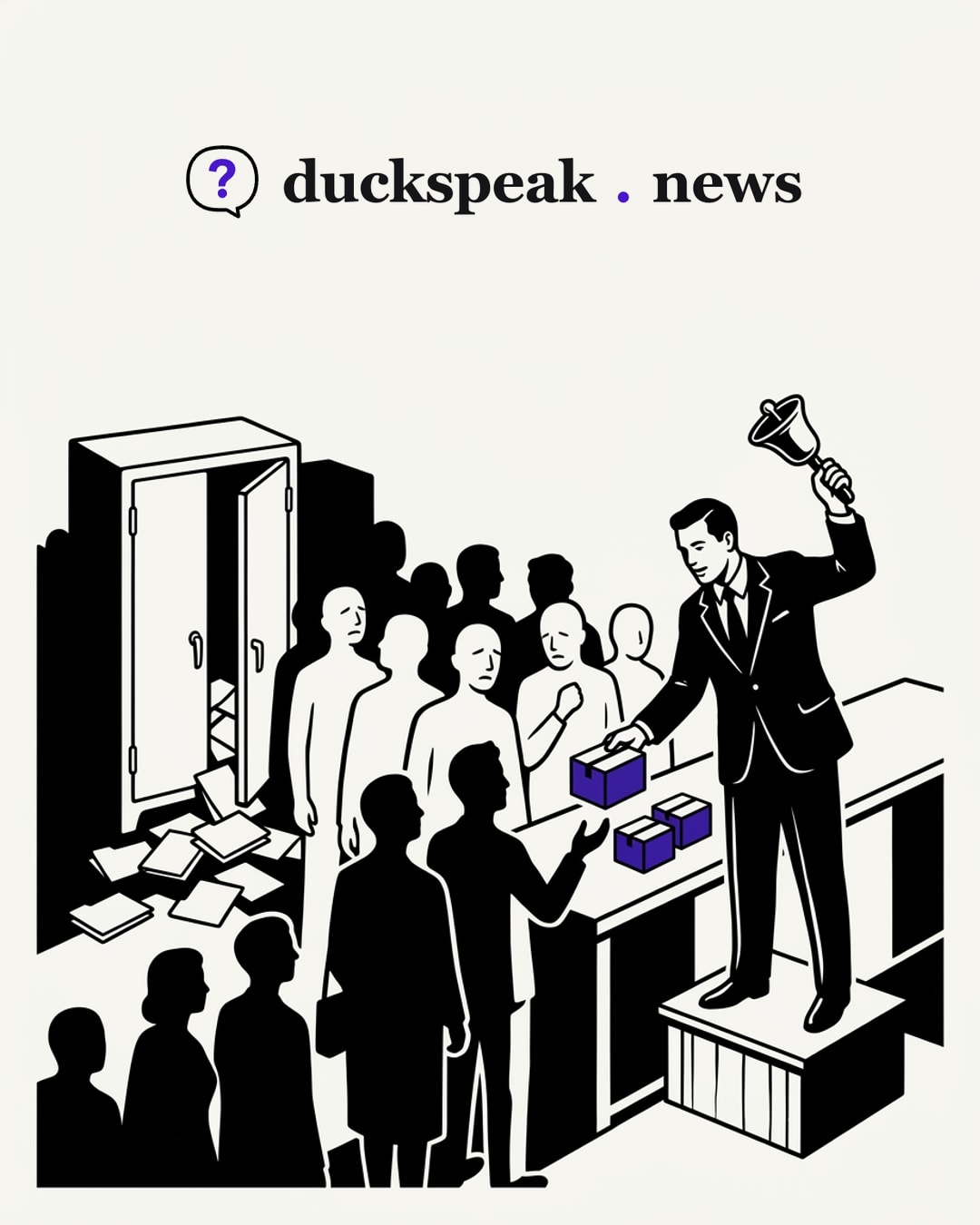
One article, two mastheads
Fox News and CyberGuy present what is, on the evidence given, the same text. Both carry the headline “Oracle Health data breach exposes nearly 20 million patients” [1][2]. Both use the same opening (“When you visit a doctor or hospital, you expect your medical information to stay private”) and the same closing “key takeaways” paragraph [1][2]. The Fox version is a republication of Kurt Knutsson’s CyberGuy column, with his byline credit at the bottom [2]. So this is one voice appearing twice, not two outlets independently confirming anything. A reader who sees it on both sites may feel corroboration where there is only repetition. That is a small, quiet case of what Orwell would recognise: the same sentences, circulated until they feel like consensus.
The hedge that does not hedge
The headline says the breach “exposes nearly 20 million patients” as a fact [1][2]. The body then retreats: “reportedly,” “appears to be,” “allegedly,” “may have obtained” [1]. Both outlets concede that “Oracle has not separately confirmed the nationwide total in a public statement” [1][2]. The 19,929,149 figure is described as “reported in connection with the filing,” and the only state number actually tied to a filing is Texas’s 2,992,244 [1]. The piece itself says the state figures “should not be added to the nationwide total” [1], which leaves the reader unable to see how the headline number was built. The headline asserts what the body declines to establish. We have not seen the filing either, only the outlets’ description of it.
Who did what? The passive voice at work
The article is honest in places. It notes that “investigators have not publicly established that the server’s age caused the breach” and that how the credentials were stolen “remains unclear” [1]. Yet the framing leans the other way: the “legacy server” is called “even more frustrating,” and the closing asks, “How much sensitive patient information remains on older healthcare systems” [1]. Elsewhere the language is agentless: data “was compromised,” a breach “exposes,” records “sit on a server you never knew existed” [1]. Oracle bought Cerner for roughly “$28.3 billion” [1], and the server “had not yet been migrated to Oracle Cloud” [1], yet the corporate decisions behind that are never examined. The outlets also write that “We reached out to Oracle Health for comment, but did not hear back before our deadline” [1][2]. That is a fair disclosure, but it means every Oracle-side claim rests on “Oracle’s customer communications” as paraphrased, not on anything the reader can see.
The timeline is also softened into a mild observation: “That’s a long time for people to remain uncertain” [1]. The text gives the breach window as January 22 to April 1, 2025, with discovery on February 20, and a public count only surfacing in October 2026 [1]. That gap is more than “uncertain.” The piece does not explain who was told what, and when. Whether earlier customer notices reached patients is not answered.
From alarm to checkout
Huxley’s point was that pleasure and convenience can govern as well as fear does. The piece runs on both. The alarm (“a massive cyberattack… raising serious questions”) leads to a numbered to-do list that moves the burden onto the victim [1]. In the CyberGuy original, step 4 is a named product: “Norton Antivirus Plus (CyberGuy Deal: 58% off)” with pricing, and step 7 recommends LifeLock “(CyberGuy Deal: 24% off)” [1]. The article itself concedes the weakness of the first: “Antivirus protection cannot undo the Oracle Health breach” [1]. The attack described used stolen credentials on a server, not malware on a patient’s phone [1]. The product is therefore only loosely matched to the harm. The Fox version trims the product names and replaces them with links to “best 2026 antivirus protection winners” at Cyberguy.com [2]. It also invites readers to a “CyberGuy LIVE class” [2]. This is speculative, but disclosure would be the normal remedy.
What a reader would need instead
- The actual state filings (the Texas Attorney General’s breach portal is named in the piece [1]) and a clear statement of how the 19.9 million was derived.
- On-the-record answers from Oracle Health, and an account of what customer hospitals were told in March 2025 and when patients were told.
- The responsible party named in the sentence (“Oracle failed to…”, or a plain statement that this isn’t established).
- Clear disclosure of any commercial relationship behind the product recommendations.
- Honest labelling when a column is republished, so repetition is not read as confirmation.
Note: all claims rely on the two articles cited, which appear to be the same column. Nothing here independently verifies the breach figures.