

A headline with a verdict in it
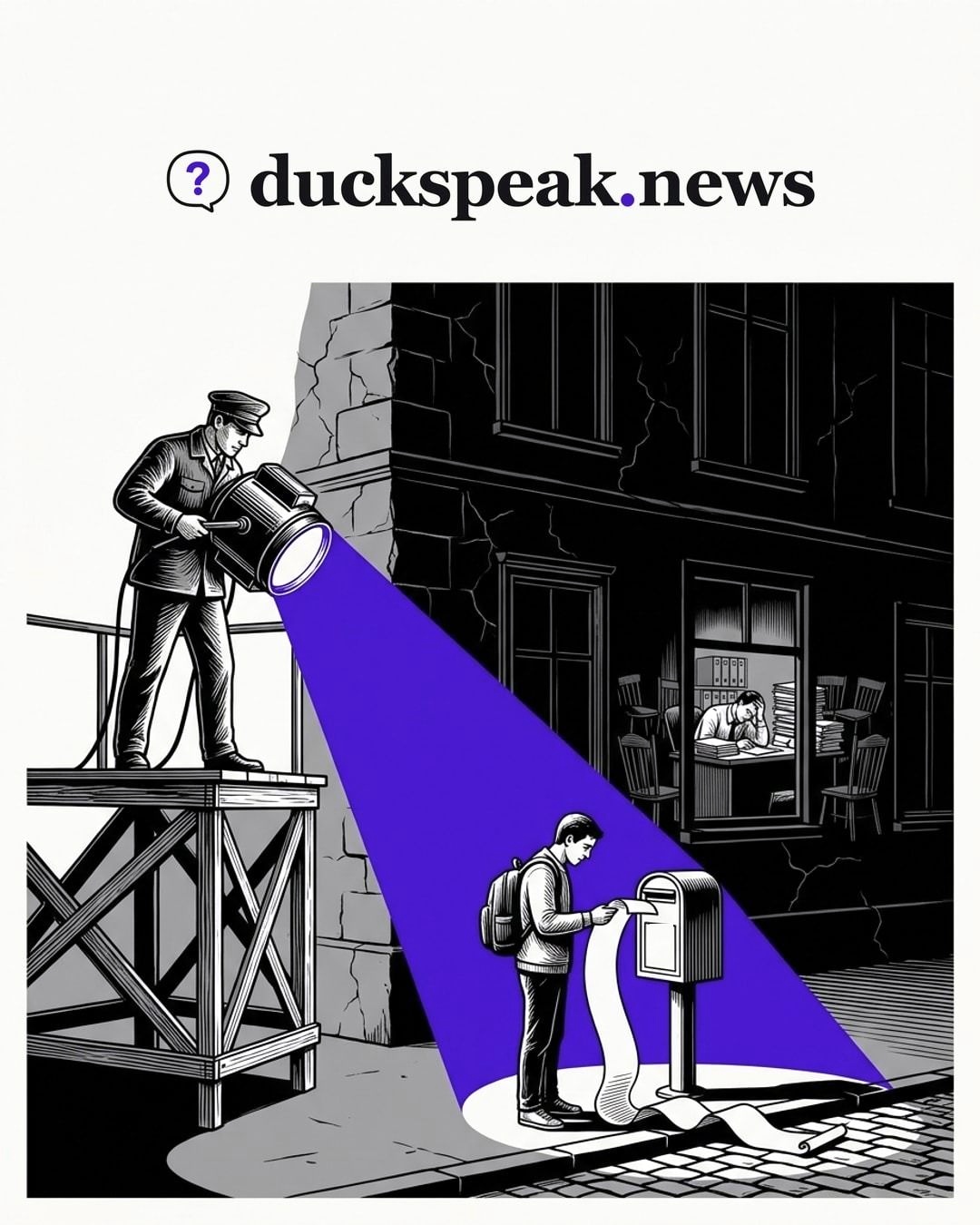
The Independent’s headline says AI “turned Britain into a nation of super-complainers”Headline asserts, body hedgesThe mother pattern behind scare quotes, modal deletion, and the commitment-free statement: a headline states a claim as settled fact while the article underneath it quietly hedges, denies, or contradicts it. [1]. Read the body and the claim shrinks. The article’s own evidence concerns some complaints to some public bodies, and the article says outright that many complainants are “genuinely aggrieved” [1]. The headline still hands the reader a national character flaw. This is the pattern behind headline asserts, body hedges: a sweeping claim on top, a more qualified story underneath. A reader who only sees the headline, which is most readers, leaves with the label “nation of super-complainers”.
The surge that is never measured
The opening says complaints are “surging” and that bodies report “a huge spike” [1]. What the article never gives is a baseline: how many complaints, before or after, at which council, school or police force. The one figure offered is that employment tribunals “soared by 39 per cent”Guilt by juxtapositionGuilt by juxtaposition places separate cases or facts side by side so the reader infers a link, a pattern or a cause the article never states, and so never has to prove. from January to March, “according to data compiled by The Economist” [1]. The article does not say that source attributes the rise to AI, and it does not consider other causes of tribunal backlogs. Yet the sentence sits in an article about AI, so the reader connects them. A number placed beside a cause becomes evidence for it. Ask of any such statistic: does the source itself make the link, or did the paragraph around it?
Who is “experts”?
The article leans on “Experts say” and “experts said” [1]. Some are named: Sam Freedman, Helen Dewdney, Councillor Richard Clewer. But the claim that complaints are “petty and spurious” is attributed only to unnamed “experts” [1]. Likewise “caseworkers employed in MPs offices” say “around half” of cases are partly AI-written [1]. We are not told how many caseworkers, which offices, or how they judged a text to be AI-written. The figure is vivid and uncheckable, and the reader cannot tell a survey from an impression. Treat it as an anecdote until a method appears.
The adjectives do the arguing
The complaints are “unnecessarily lengthy, inaccurate” and full of “nonsensical ‘legalese’” [1], stated in the outlet’s own voice as a general finding. The support is thinner: Dewdney’s account of one broadband email and one nonexistent ombudsman [1], plus caseworkers calling cases “verbose” [1]. Two examples from one campaigner do not establish a pattern across Britain’s complaints. Those are plausible and worth knowing, but they are illustrations presented as a measurement. Words like “nuisance” and “relentless pressure” [1] carry the emotional weight that the numbers cannot.
Whose problem is it?
The structure puts the citizen at the centre of the story as the cause. The institutional side appears as a trade-body quote about “administrative burdens at a time of significant resource pressure” [1]. That phrase is the only hint that capacity, not complaint volume alone, might be part of the cause, and the article does not pursue it. The employment tribunal wait “until 2029” [1] is described as a result of the surge, not of how many staff or judges exist. The article does not show what the real cause is. That is the point: the framing settles the question the evidence leaves open.
“Change the way their systems work”
The most consequential passage is Freedman’s: authorities “will have to make it harder to complain or use AI to reply” [1], and councils are examining “potential future government action” [1]. Making it harder to complain is a restriction on citizens’ access to redress. The article reports it as an anticipated technical adaptation (“rebuild their systems”) and lets Freedman note the downside only briefly. Which body is considering what, and what “potential future government action” means, is never specified. The sentence is a commitment-free statement: “potential future government action”Commitment-free statementA commitment-free statement is an institutional quote that concedes a problem in feeling-language while specifying no agent, no deadline, and no way to check later whether it happened. [1] names no agent, no proposal and no date. A reader cannot tell whether this is a plan, a hope or a shrug.
What a reader would need instead
6 checks to run on the next story like this one.
-
Actual complaint volumes, before and after widespread LLM use, from named councils, forces or ombudsmen.
Gap in the coverage
-
Confirmation from The Economist’s data whether it attributes the tribunal rise to AI, and what other factors it lists.
-
The method behind “around half” of MPs’ cases, and how AI authorship was judged.
Gap in the coverage
-
Upheld or resolved rates for AI-assisted complaints compared with others.
Gap in the coverage
-
Whether public bodies already use AI to process complaints, which Freedman’s “chatbots talking to each other” [1] suggests but the article does not report.
Gap in the coverage
-
Who is proposing to make complaining harder, and how rights of redress would be protected.