Horse-race framing is the coverage of a political decision as a contest: a battle, a match, a test of unity, a leader who “backed down” or rode a “bounce.” The contest is real enough. Politicians do compete, and readers do want to know who is winning. The problem is substitution. Once the story is told as a race, its natural questions become “who is ahead?” and “who flinched?”, and the questions that would let a reader judge the outcome (what is in the budget, what the deal says, who pays) stop being asked. The race also comes with its own precision: polls, dates and vote shares to the decimal, which make the piece feel factual while the substance stays empty.
- A deal with no contents. A wire story on a transatlantic crisis said a president “eventually backed down” after a security agreement. “Backed down” tells you who flinched. It says nothing about what the agreement contained, what was conceded, or by whom, and the article never said it didn’t know.
- Decimals for the contest. A by-election story gave vote shares to the decimal and the exact dates of the outgoing MP’s tenure. The same piece mentioned a new prime minister in passing, with no account of how the previous one had left. The contest got the precision; the constitutional event got a clause.
- Who pays, recast as a leadership test. When a prime minister announced a care “vision” without saying how it would be funded, the coverage turned to election timing and whether his party could “hang on” to his poll bounce. The material question became a question about political nerve.
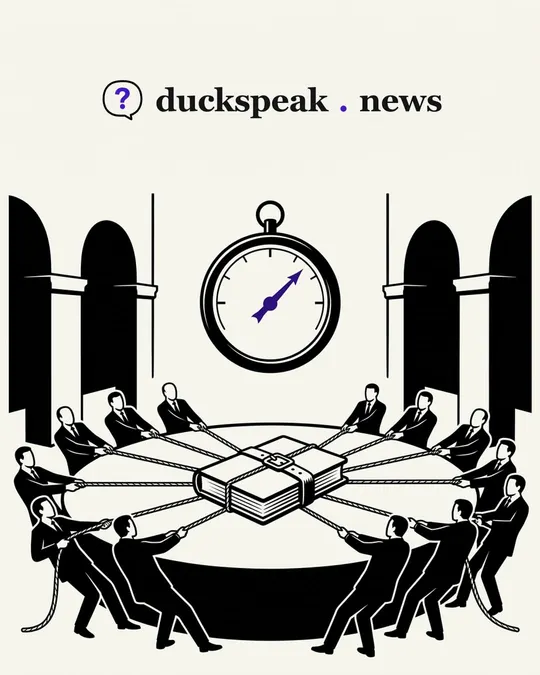
- A budget as a battlefield. Pre-summit coverage of an EU budget called it a “bataille budgétaire” (budget battle), mapped the “lignes de fractures” (fault lines) country by country, and measured success by whether European “unité” (unity) would survive the “épreuve” (test). Neither dispatch gave the budget’s size or how it would be split between defence, farming and migration.
The test: strike out every word about winning, losing, fighting or holding together, and see what is left. If the remaining sentences cannot tell the reader what was decided or proposed, the race was the whole story.