

A number that cannot mean what it says
France Info’s headline and lead tell readers that “Plus de 30 000 pilleurs ont été dénombrés à Marseille en marge des manifestations” (more than 30,000 looters were counted in Marseille on the margins of the demonstrations) [1]. The same paragraph says that among them were 8,000 “émeutiers” (rioters), and that there were 99 gardes à vue (detentions) directly linked to the riots [1]. The only source named is the préfecture de police des Bouches-du-Rhône.
Read the text against its own headline. The article itself says the préfecture “ne donne aucun chiffre sur la participation de la manifestation” (gives no figure for turnout) and has not yet quantified the “très nombreux” (very many) shops looted [1]. So we have a count of looters, but no count of marchers, no count of shops, and 99 detentions. How 30,000 people were identified as “pilleurs” is never explained. It is possible the figure conflates attendance with offending, or that it is a misprint or mislabel; the article does not say, and we cannot tell. Either way, a headline that states a crime as a fact about 30,000 people was built on one unexplained agency figure.
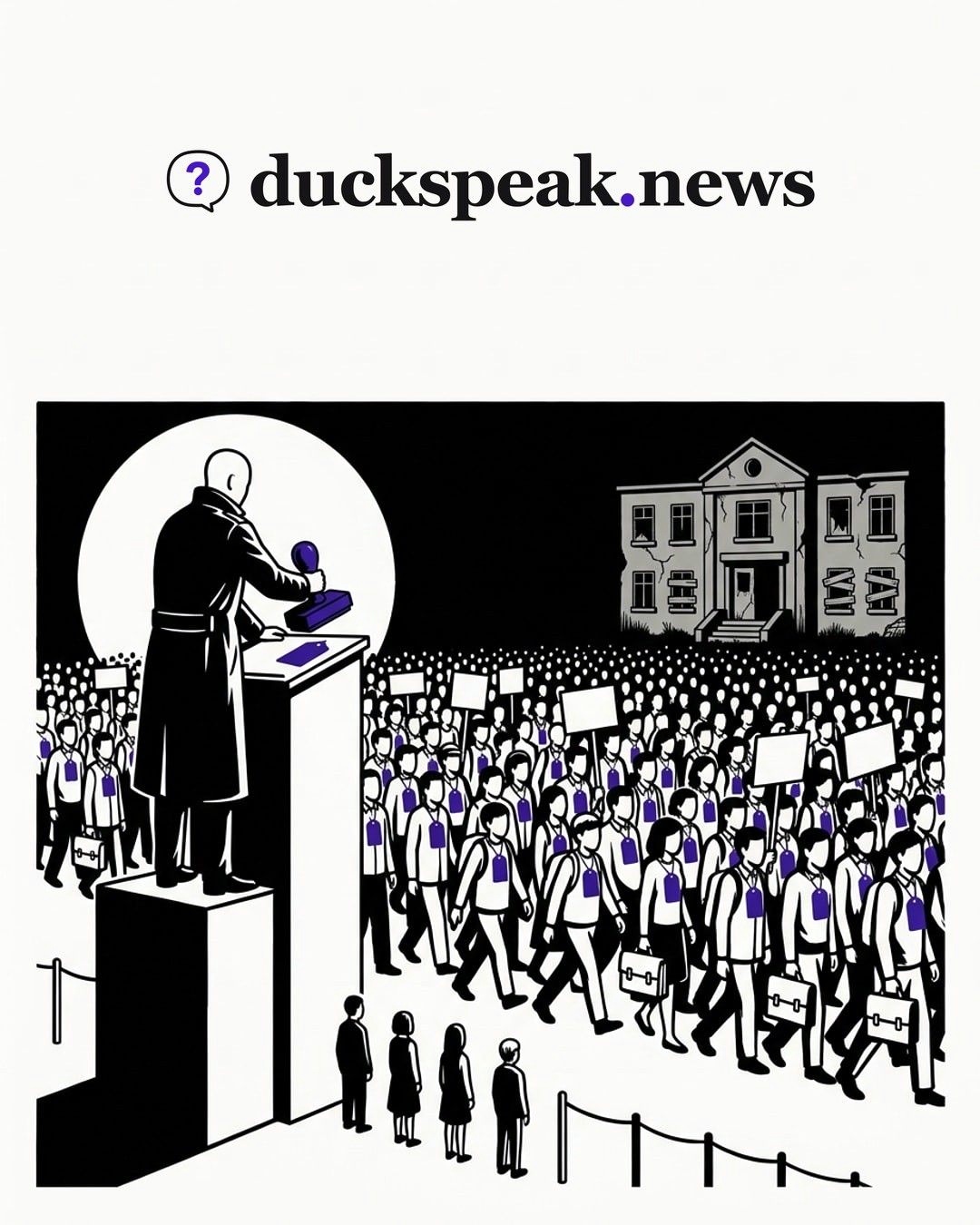
This is a Newspeak mechanism in miniature. The word “pilleur” does the work of a category, and the category absorbs everyone present. Once the label is in the headline, the gap between 99 arrests and 30,000 “looters” becomes the reader’s problem, not the outlet’s.
The official frame travels
The vocabulary repeats across outlets. Interior Minister Laurent Nuñez speaks of “plusieurs milliers d’individus d’ultragauche”Euphemism launderingEuphemism laundering is official or institutional vocabulary repeated across coverage until it stops sounding like a chosen frame and starts sounding like plain description. later “rejoints par des délinquants” (several thousand ultra-left individuals, later joined by delinquents) [1]. The Guardian reports that Macron’s government and Marine Le Pen “both blamed what they called ‘ultra-left’ groups”, and that Prime Minister Lecornu blamed “the ultra-left and criminals” [3]. GB News, in a passage with no attribution, describes “mobs of balaclava-clad thugs”Loaded-vocabulary adoptionLoaded-vocabulary adoption is when a charged word coined by one side of a dispute ('raid', 'radical', 'ballooning') moves out of its quotation marks and into the outlet's own narration, so the argument is made before the evidence. and calls the events “violent riots” that “continued to rock the nation” [2].
Euphemism laundering is official or institutional vocabulary repeated across coverage until it stops sounding like a chosen frame and starts sounding like plain description.Loaded-vocabulary adoption is when a charged word coined by one side of a dispute ('raid', 'radical', 'ballooning') moves out of its quotation marks and into the outlet's own narration, so the argument is made before the evidence.
Note the difference in how each handles the label. The Guardian attributes it (“what they called”). France Info repeats the ministerial phrase in quotation marks but gives no independent check. GB News adopts the vocabulary as its own voice. By contrast, an opinion piece in The Guardian describes a crowd of “black bloc”, gilets jaunes, “young and middle-aged people who were furious”, and “opportunistic young men”, and admits the author “was unable to stop and talk to people amid this fury” [5]. That is a more honest account of uncertainty than the government’s single-cause label, and notably it comes as opinion, not as the news report.
Where the harm to protesters lives
The injuries to protesters do appear in the sources, but in different places and at different volume. France Info’s separate report says a 17-year-old girl in Mulhouse permanently lost her left eye, and that this was the third IGPN referral of the day, after a hand torn off in Saint-Étienne and a serious skull injury in Paris [4]. The prosecutor warns the investigations will be “complexes” (complex) given the number of people and the “caractère extrêmement difficile des opérations de maintien de l’ordre” (extremely difficult nature of the policing operations) [4]. In the Marseille article, the police side of the ledger is given in detail: 118 injured officers, 4,000 tear gas grenades, and a full list of units deployed [1]. The grenade count is there, but nothing connects it to any harm to the crowd. The Saint-Étienne and Mulhouse stories appear only as related-headline links on that page [1].
The Guardian’s news report does mention that “a 17-year-old boy had his right hand blown off by a crowd-control grenade” [3], one sentence among many. GB News, for its part, treats police force as a scandal only when the vehicles were paid for by British taxpayers: “French police ‘rammed student protesters with cars funded by British taxpayer’” [2]. The harm to a 14-year-old girl is real in that report, but the framing makes the British budget the story. A cynic might say the injured teenager is a vehicle for a procurement grievance; that is our interpretation, not something the article states.
The cause goes missing
The Guardian reports that the marches backed schoolchildren’s demands for “more teachers and repairs to decrepit schools” and followed “four weeks of street marches and barricades of schools” [3]. The Guardian opinion piece cites petrol at a record €2.4 per litre [5]. In the France Info Marseille piece the cause is reduced to “manifestations” and “mobilisation du 17 octobre” [1], and the Mulhouse article says only “contre la vie chère” (against the high cost of living) [4]. The date has become the name of the event. A date carries no grievance.
What a reader would need instead
5 checks to run on the next story like this one.
-
The method behind 30,000. Who counted, what counts as a “pilleur”, and how it relates to 8,000 “émeutiers” and 99 detentions. Until the préfecture explains it, treat the figure as unverified.
Gap in the coverage
-
Turnout and damage figures from independent bodies. The CCI is cited as helping identify shops [1]; its numbers, not an interim police statement, should lead.
Gap in the coverage
-
Attribution, not adoption. “Ultra-left” is the government’s word [3]. Reports should say so each time, as The Guardian does.
-
The IGPN and IGGN inquiries into Saint-Étienne, Mulhouse and Paris [4], tracked with the same prominence as the arrest counts.
Gap in the coverage
-
The demands. Schools, wages and fuel prices belong in the first paragraph, not in the opinion section.
Gap in the coverage