

Quotation marks with no one behind them
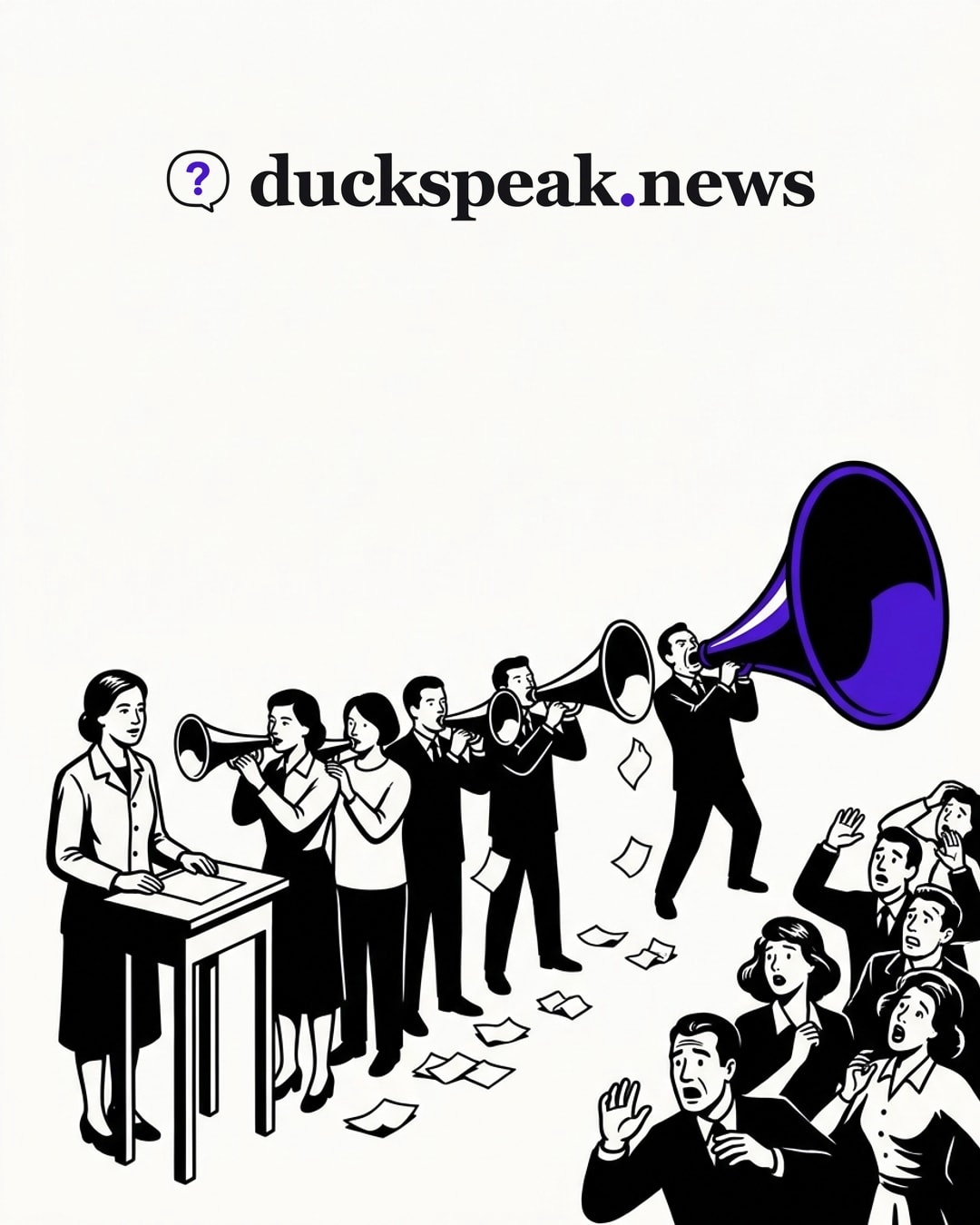
The Independent’s report opens on “John Healey’s “risky”Scare quotesScare quotes are quotation marks placed around a word an outlet won't stand behind, so it can print the word anyway. Budget” and says it failed to tackle the “worst decade for growth” for household incomes on record, as “an influential think tank has warned” [1]. Both phrases sit in quotation marks, so a reader assumes the IFS said them. The article never shows anyone saying either one. What the IFS director, Helen Miller, does say is narrower: “There are risks to this approach” [1]. In the same breath she calls letting headroom fall to absorb borrowing costs “reasonable” [1].
That is how scare quotes work here. The marks suggest a source without naming one, so the outlet can print a sharper word than any quote in the article supports. The growth claim is murkier still. The nearest words in the article come from Professor David Miles of the OBR, not the IFS: “virtually no growth in per person real household disposable income”, which he calls “pretty unusual in the history of the UK” [1]. “Pretty unusual” is a weaker claim than “on record”, and the article never says who made the stronger one. To spot this next time, look for a quoted word in a headline or opening line and then check whether anyone in the body actually says it.
Damning, scathing, grumpy
The same report calls the IFS response “a damningAdjective inflationAdjective inflation is a dramatic modifier ('fiery denial,' 'bombshell') bolted onto a flat, uncontested sentence to make it read as a conflict story. assessment” and Miller’s comments on defence “a scathing rebuke” [1]. Here is the rebuke as she gave it: “I am grumpy about how the chancellor decided to fund the relatively small hole in the defence investment plan” [1]. This is adjective inflation. A director who calls the chancellor’s decision “reasonable” and her own mood “grumpy” ends up sounding like a prosecutor. Readers who only take in the modifiers learn that the think tank was furious. They don’t learn what it actually objected to, which was drawing down reserves (“categorically not what the reserves are for” [1]).
The Guardian does the same thing with “In a damning analysis” and “Experts rounded on Healey’s steady-as-she-goes budget” [2]. Its own wording also scales up in the other direction. Miller warned of “a spending review that looks pretty brutal for some departments” [2]. In the Guardian’s opening paragraph this becomes “dire warnings his first budget could lead to brutal spending cuts” [2]. The “pretty” and the “for some departments” have gone.
There is a smaller contrast on defence as well. In its own voice, the Independent writes of “the £4.7bn black hole in the defence investment plan (Dip) left by Sir Keir Starmer” [1]. A few paragraphs later, the economist it quotes calls the same gap “the relatively small hole” [1].
One set of IFS numbers, three different sizes
The IFS figures reach readers in three shapes. The Independent quotes Miller precisely: avoiding real-terms cuts “could plausibly require a top-up of £17 billion”, and that is “even before thinking about the £11 billion needed to fund defence plans” [1]. The Guardian adds the two together and calls the total “a £28bn shortfall in public finances” [2]. The Mirror’s editorial keeps only the first figure: “public services face further cuts without another £17 billion” [3]. The Mirror is a labelled comment piece and is entitled to its emphasis, but a reader who sees all three will struggle to tell what the gap is.
Further down, the Guardian explains the £28bn as what Healey “would need to have set aside” to offset inflation on spending plans and reach 3% of GDP on defence [2]. That is the cost of avoiding cuts and meeting a target. A “shortfall in public finances” sounds like a hole in the accounts. The “could plausibly” in Miller’s sentence also never makes it into the Guardian’s version.
The welfare bill gets an adjective
The Independent writes, in its own voice, that the Budget faced criticism “for not dealing with the ballooningLoaded-vocabulary adoptionLoaded-vocabulary adoption is when a charged word coined by one side of a dispute ('raid', 'radical', 'ballooning') moves out of its quotation marks and into the outlet's own narration, so the argument is made before the evidence. cost of welfare, including from Tory leader Kemi Badenoch”, who says the country is “drowning in an out-of-control welfare system” [1]. This is loaded-vocabulary adoption. The opposition’s charge (out of control, too big) is made in the narration before Badenoch is even quoted, so the reader meets her as confirming a fact. The second Independent report repeats it: Burnham “ducked questions over how he would try to cut the ballooning welfare bill” [6]. That sentence takes for granted that a cut is the goal. Burnham’s answer rejects the premise (“I come at it a different way”) [6], and the Guardian quotes him ruling out “brutal cuts” [5]. The BBC’s paper review handles the Mail’s version better, writing of what the Mail “calls ‘the runaway benefits bill’” [4]. The label stays with the paper that chose it.
The breakdown that would let a reader test “ballooning” appears in only one place. The Guardian, citing the OBR, says welfare spending grows from £334bn to £431bn, “with about half of that being spent on pensioners and a quarter on sickness and disability benefits” [2]. The coverage also disagrees on the date: the Guardian gives £431bn “by 2030” [2], while the i, as relayed by the BBC, says “by 2032” [4]. None of the articles explains the difference.
Who won the morning
The BBC review also passes on the Mail’s account that Healey was “forced into screeching U-turnHorse-race framingHorse-race framing reports a policy fight as a contest, with battles, winners, flinches and bounces, so the reader learns who is ahead and never what the deal, the budget or the plan actually contains.”, a “humiliation for Healey” [4]. This is horse-race framing, and it belongs to the Mail; the BBC only relays it. The “U-turn” was about a timetable. Healey said “There will be a reduction in the benefits bill”, then told Channel 4 “we’ve not set a timetable for that” [2]. Framing it as humiliation turns the story into a question of nerve. The substance is that the welfare plans are waiting on two reviews, by Alan Milburn and Stephen Timms, and nobody yet knows what they contain [2][5].
As in this site’s earlier piece on the Budget’s vocabulary, the Independent again calls the Resolution Foundation’s criticism “particularly embarrassing” because of Torsten Bell’s past role there [1]. It still quotes no one who is embarrassed.
What a reader would need instead
5 checks to run on the next story like this one.
-
Quotation marks only around words someone said. If the IFS said “risks”, print “risks”. If “worst decade on record” comes from somewhere, name the source; if it is the outlet’s own reading of Miles’s “pretty unusual” [1], say so.
-
The IFS’s own qualifiers. “Reasonable”, “could plausibly”, “for some departments”: these words are part of the finding, not padding.
-
The £28bn broken down: £17bn to avoid real-terms cuts to departments, £11bn for defence plans, and a clear statement that these are conditional estimates from the IFS’s Budget analysis, which readers can consult directly.
Gap in the coverage
-
The welfare forecast with its parts: how much goes to pensions, how much to sickness and disability, and which year the £431bn refers to. The OBR’s forecast is the document that settles this. Describing the bill as “ballooning” or “runaway” is a matter for the people quoted, not for the narration.
-
The welfare plan itself: the Milburn and Timms reviews will decide its content, so the useful question is what they are asked to deliver, not who blinked on a timetable.