

From “open” to “ready”
Andy Burnham’s actual words were careful. “Listening to calls for a formal apology on behalf of the British state will form an important part of this process and I am open to them” [1]. Being open to calls is not the same as being ready to apologise. Some of the coverage dropped that difference.
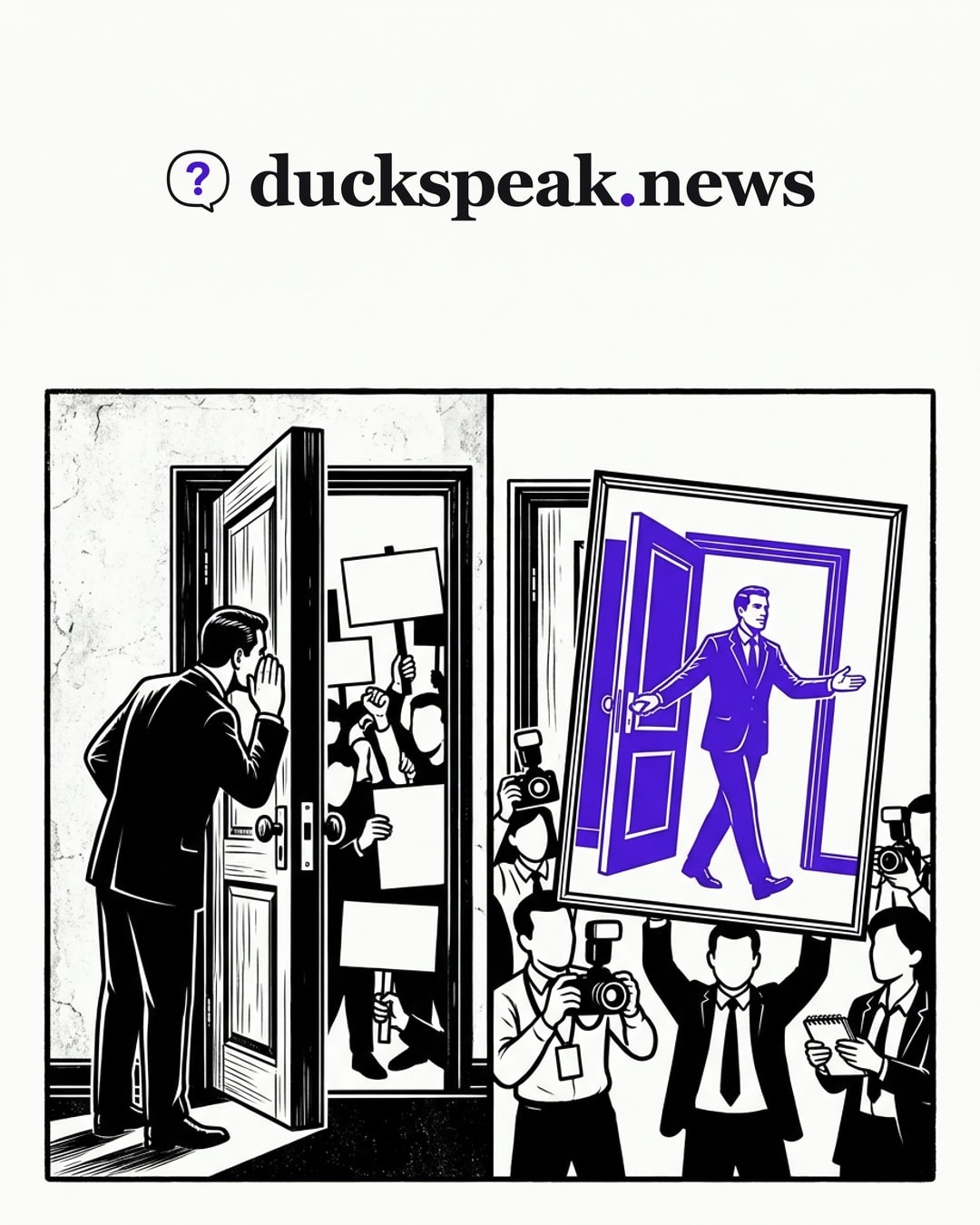
France 24’s lede keeps the conditional: the UK “serait prêt à présenter des excuses officielles” (would be ready to offer an official apology) [3]. Its headline drops it: “Le Royaume-Uni prêt à présenter des excuses officiellesModal deletionModal deletion is dropping a hedge word like 'could' from a headline, turning a hypothesis the article's own body still calls conditional into a present-tense fact.” (The United Kingdom ready to offer an official apology) [3]. This is modal deletion. The headline describes a government on the verge of apologising. Burnham described something further back: listening to calls for an apology, as one part of a process that has no date. You can catch this move by comparing the verb in the headline with the verb in the quote. RFI’s headline stays with the quote, saying Burnham “se dit ouvert” (says he is open) [6]. That shows the accurate version was there to write.
The Independent firms up the claim from a different direction. Its headline has Badenoch hitting out at a “formal UK slavery apologyHeadline asserts, body hedgesThe mother pattern behind scare quotes, modal deletion, and the commitment-free statement: a headline states a claim as settled fact while the article underneath it quietly hedges, denies, or contradicts it.” [4], as if one existed. Its first sentence then says Badenoch was attacking Burnham’s “consideration of a formal apology” [4]. This is headline asserts, body hedges. A reader who only sees the headline will think Britain has apologised, or is about to, and that the opposition is fighting it. The body describes an argument about something that may never happen.
A process with nothing in it
Burnham’s own statement is a commitment-free statement. It expresses “sorrow and regret” [1] and ends with “I am open to themCommitment-free statementA commitment-free statement is an institutional quote that concedes a problem in feeling-language while specifying no agent, no deadline, and no way to check later whether it happened.” [2]. It names no body to run the dialogue, no timetable and no point at which openness turns into a decision. The palace statement GB News carries works the same way: the King “will not shy away from confronting the most shameful aspects of the past” [5]. The words are emotional, but there is nothing in them a reader could check later.
None of the outlets asks what the dialogue actually involves. Instead, the government’s phrase moves into the outlets’ own narration. GB News writes in its own voice that the Prime Minister “offered structured talks with affected countries and campaign groupsEuphemism launderingEuphemism laundering is official or institutional vocabulary repeated across coverage until it stops sounding like a chosen frame and starts sounding like plain description.” [5]. RFI goes further and says he “propose un dialogue constructif” (proposes a constructive dialogue) [6]. That turns “structured”, a word about format, into “constructive”, a word about how it will turn out, which nobody claimed. This is euphemism laundering. Once the term stops appearing in quotation marks, it reads as if something concrete exists. Readers are never told who sits at the table or what they would be allowed to decide.
Only CBS News offers a reason why an apology and reparations might be legally linked. It quotes a lawyer saying that apologising carries implications “in terms of the legal obligation to make reparation” [8]. That explains why “open to calls” stops where it does. Even so, CBS supports its claim that “Experts say the royals are concerned” [8] with a single expert, speaking in 2023, so treat it as one view, not a consensus. The UK outlets don’t raise the legal question at all.
The fact that tests the argument comes last
Burnham’s case against reparations depends on time. British people today, he writes, cannot be held liable for wrongs “that happened in a different age under different laws and in which they played no personal part” [2]. GB News repeats that framing in its own voice, calling it “a trade that was abolished almost 200 years ago” [5].
The BBC holds the fact that most directly tests that claim, and it puts it in the closing lines. First, plantation owners “were paid for the loss of their slaves”. Then: “The UK only finished paying off the debt it incurred to cover the payments in 2015Buried ledeA buried lede is the fact that should have organized the whole story, relegated instead to the final sentence or hidden inside someone else's quote.” [2]. This is a buried lede. The report never connects that sentence to Burnham’s “different age”. Yet it means British taxpayers alive today were still servicing the cost of compensating slave owners within the last decade. That doesn’t settle whether reparations are owed. It does complicate the claim that the matter belongs to another era, and the coverage never puts that complication to the Prime Minister. CBS gives the scale: £20 million allocated “to compensate slave owners, but not the enslaved” [8]. The Mirror, The Independent and GB News leave out the compensation entirely [1][4][5].
Ending on the dance
GB News’s headline sets up a contest: the King “will not apologise for slavery despite Andy Burnham’s openness” [5]. Its own body takes that apart. A constitutional monarch “only acts on the advice of his government”, and “no changes were needed to his speech” [5]. The same outlet’s video caption says the opposite, that Burnham “could make King Charles apologise for slavery” [5].
The piece then closes on palace praise: the King “working as hard as ever”, “the job he was born to do”, “a few unscripted Royal dance moves and allNostalgia offsetThe nostalgia offset is a closing paragraph of warm, unrelated sentiment (record sales, hit songs, career highlights) that a piece uses to end on feeling rather than on the allegation it just reported.” [5]. This is a nostalgia offset. A story about whether the state will apologise for slavery ends on the monarch’s stamina and dancing. The demand at the centre of the story, the protesters’ placards reading “Pay us what you owe us” that CBS reports [8], has dropped out by the end. GB News’s earlier tour piece takes a similar route. It opens on the King joining a Junkanoo and leaves the Guyanese president’s call for an apology to its last lines [7].
What a reader would need instead
5 checks to run on the next story like this one.
-
Burnham’s words next to the headlines. He said he is open to calls, not that an apology is coming.
-
What the “structured dialogue” is. Who runs it, which governments and campaigners are included, and whether it has a deadline. None of the articles say, and that gap should be reported as a gap.
-
The legal question. Does a formal state apology create liability for reparations? CBS is the only outlet that raises it [8].
Gap in the coverage
-
The compensation record. The £20 million paid to slave owners [8] and the debt that ran until 2015 [2] belong next to the “different age” argument, not after it. University College London’s Legacies of British Slavery project tracks who received that compensation.
-
The Caribbean position in its own terms. Mia Mottley’s commitment to engage “while still seeking reparatory justice” [2] and the Caribbean reparations commission’s demands [8] are the substance of the talks, not background to the King’s tour.
Gap in the coverage