

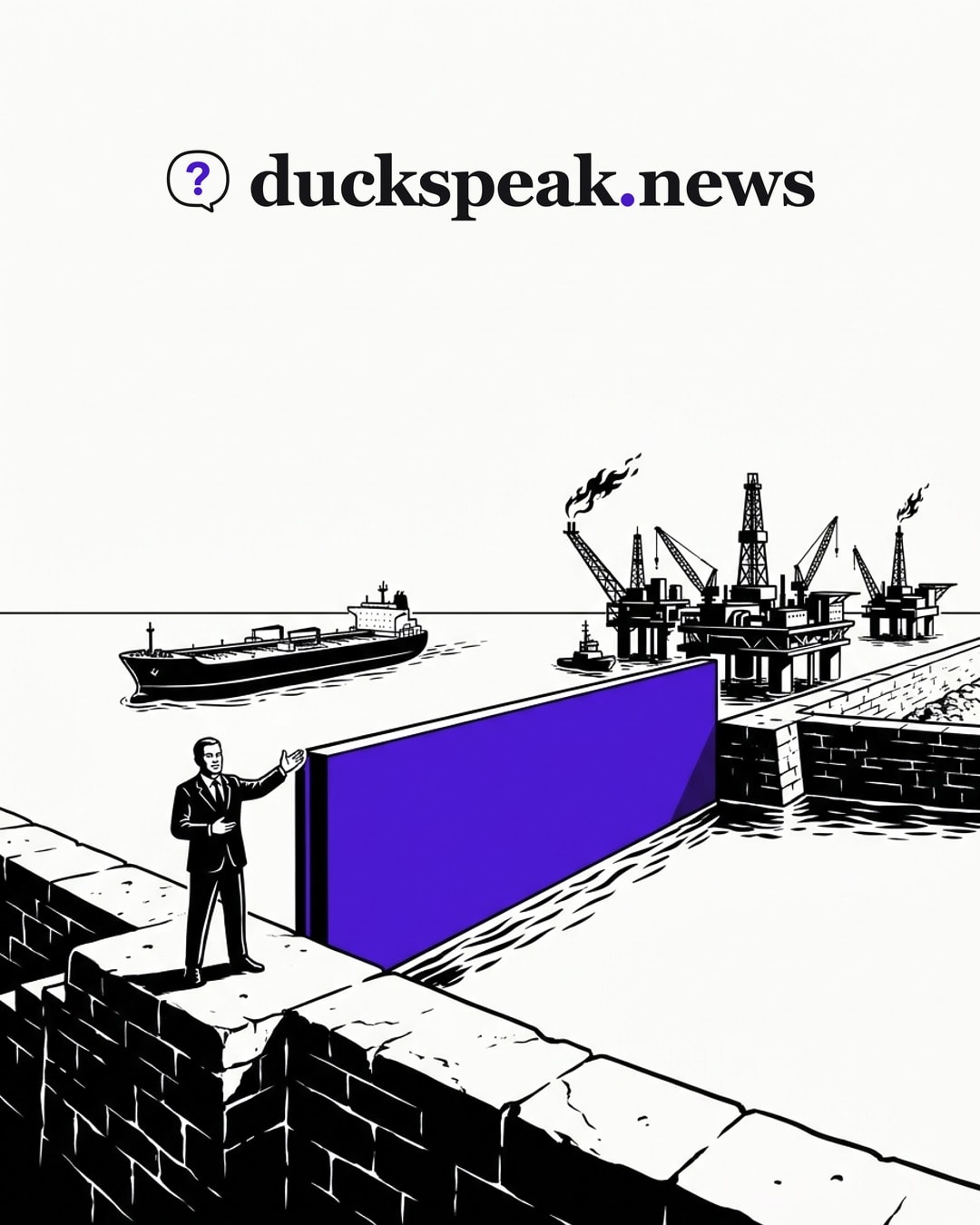
A name that argues
The bill now before Parliament has a title that makes a claim on its own. “Energy Independence” implies that Britain is dependent today and that this legislation ends that. The government’s overview only partly says what it means: the bill is meant to make Britain “less exposed to volatile global fossil fuel markets” and to “break Britain’s dependence on global fossil fuel markets” [4], under a heading promising “homegrown clean energy we control” [4]. It gives no date and no import level at which independence would count as achieved.
In the same list, the bill would “end new oil and gas licensing to explore new fields” while supporting existing fields “for their lifetime” through “Transitional Energy Certificates” [4]. A supporter reads homegrown clean power as the independence. A critic reads the end of new licensing as the opposite of independence. Both readings hold up. What matters is whether the coverage tells readers there is a question at all.
Every outlet has to print a bill’s formal title, and doing so is no fault. The difference lies in what surrounds the title. BBC News opens its explanation in its own voice: “The Energy Independence Bill would remove the North Sea Transition Authority’s ability to grant new oil and gas licences” [1]. Nothing in that sentence is wrong, but nothing near it tests the title either, so the idea that ending licences produces independence goes by without a question. The BBC does quote Offshore Energies UK’s David Whitehouse saying Britain “imports more than 40% of the energy it needs” [1], but the piece never links that figure to the title or asks independence from what. To spot this move, look for a government-chosen name used as the subject of a sentence, with nothing nearby asking whether the name fits.
The Independent also uses the title as a label, “The Energy Independence Bill, which was introduced by Miatta Fahnbulleh” [3], but it then prints the shadow energy secretary’s direct challenge: “Labour’s so-called energy independence bill will only make Britain more dependent on oil and gas imports” [3]. GB News goes further and quotes three critics who take on the word itself, including Whitehouse’s “Britain cannot import its way to energy independence” [2] and Russell Borthwick’s “The UK will not achieve energy independence by choking off one of its greatest national assets” [2]. In those two outlets the name is contested. But it is contested from one side only. Neither outlet asks anyone outside government to explain the clean-power reading of “independence”. That reading appears only in ministers’ own words, such as Andy Burnham’s “building more cheap, green power here at home” [2] [3].
Headlines that pick the other side
If the name settles the tension in the government’s favour, the headlines settle it the other way. The BBC: “UK government to outlaw new North Sea drillingHeadline asserts, body hedgesThe mother pattern behind scare quotes, modal deletion, and the commitment-free statement: a headline states a claim as settled fact while the article underneath it quietly hedges, denies, or contradicts it.” [1]. The Independent: “Burnham set to close North Sea to new oil and gas drilling” [3]. GB News: “North Sea oil ban moves closer” [2].
These are cases of headline asserts, body hedges. The text underneath each headline tells a narrower story. The BBC’s own body says the certificates would allow “additional production from ‘areas bordering or in close proximity to already licensed fields’” [1], which the government puts at “about 60 million barrels” [1], and that the bill “will not affect the decision on whether to allow drilling at Rosebank” [1]. The Independent says the bill “would not affect drilling at the Jackdaw gas field” or at Rosebank [3]. GB News’s body gets closer to the bill, describing a plan to “ban all new North Sea oil exploration licences” [2]. The factsheet’s wording is narrower still: licensing “to explore new fields” [4]. A reader who stops at the headlines learns that drilling is being outlawed. The bodies show that drilling will go on and that only new fields are closed off.
GB News adds a word it doesn’t source. The headline calls it a “‘landmark’Scare quotesScare quotes are quotation marks placed around a word an outlet won't stand behind, so it can print the word anyway.” energy bill [2], and the body repeats “The “landmark legislation”” [2]. These are scare quotes: the article never says who called it that, so the reader can’t tell whether the praise comes from the government or is being held at arm’s length.
The words the coverage didn’t take
The coverage deserves credit here. The factsheet’s most loaded phrases appear in none of the three articles: a “fair, managed and prosperous transition” (three judgements, none of them measurable) and “putting wealth, power and ownership back in the hands of working people” [4], which never says who took them. “Transition” still travels inside proper names (the North Sea Transition Authority, Transitional Energy Certificates), where it describes continued extraction as a step towards something else. The BBC at least spells out what the certificates allow, so the gap between the name and the function is visible. GB News prints the one dissenting description of them, from Andy Mayer of the Institute of Economic Affairs: “wriggle room” and “just ducking hard choices” [2].
One hedge did get lost. According to GB News, the energy secretary called the bill “a first downpayment on fixing a broken system” [2]. The BBC and The Independent quote her next line about building “a clean energy future” [1] [3] but leave out the downpayment. All three carry the Prime Minister’s firmest promise, that the changes “will bring bills down for good” [1] [2] [3]. The minister’s own caution drops out, and the boldest claim stays in.
What a reader would need instead
4 checks to run on the next story like this one.
-
A definition of independence that can be checked. A reader would need to know what share of energy Britain imports now, what share the government expects after the bill, and by when.
Gap in the coverage
-
An official baseline. Official energy statistics on import dependency would give the baseline. Whitehouse’s figure, “more than 40%” [1] or “more than 40 per cent” [2], comes from an industry body, and none of the articles check it.
Gap in the coverage
-
The scope in the headline. A reader would need the scope stated in headline terms: no new licences for new fields, continued production near existing ones, and Rosebank and Jackdaw handled separately.
-
The figure behind “for good”. The factsheet gives a number none of the outlets used: an estimated net social benefit of “£3.2 billion” from the primary legislation, with most of the £22.6 billion total depending on secondary legislation still to come [4]. That figure, and the impact assessment behind it, is where to test “for good”.
Gap in the coverage