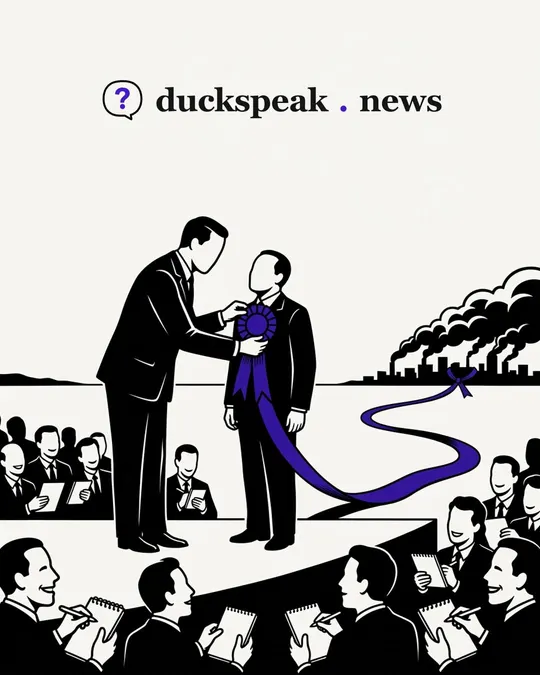
Loaded-vocabulary adoption is a charged word that belongs to one side of a dispute turning up in a news report’s own voice. The word was coined to argue: an opposition calls a tax a “raid,” a government calls a bill “radical,” a party calls spending “ballooning.” Inside quotation marks it is a claim, and the reader can weigh who is making it. Once the narration uses it unattributed, it reads as description. Nothing false has been added. The outlet has simply taken a side’s framing as its own, and the reader meets the conclusion before the facts that would test it.
- The opposition’s word, in the outlet’s headline. Covering a proposal to restore the bank surcharge, the Guardian quoted the shadow chancellor warning that “a raid on the financial services sector will stifle it.” GB News used the same word in its own headline, a “bank tax raid,” with the minister “scrambling” for funds. The other side had its vocabulary too: the unions’ “fair share,” and a per-second figure for bank profits. One surcharge arrived in three vocabularies before any outlet gave its rate, its threshold or an independent revenue estimate.
- The adjective that escaped the quote marks. A BBC report on Prime Minister’s Questions quoted a Conservative spokesperson attacking “the ballooning benefits bill.” Near the end of the same article, the BBC’s own voice said benefit spending “has ballooned in recent years.” The forecast figure was attributed to the department; the verb was the BBC’s. Same article, same word, first as an attack line and then as plain description.
- The verdict in the first sentence. A Fox News Digital report opened by saying a congresswoman was “advancing a radical proposal” to overhaul immigration enforcement, attributed to no one, before the reader learned what the bill contained. The homeland security secretary, quoted further down, called its supporters “radical leftists.” The narration and the official quote echoed each other, so the government’s word read as the newsroom’s finding.
This is not the same as euphemism laundering, where soft official language is repeated until it sounds neutral; here the word is hard, and it comes from a participant in the fight. It is also the mirror of attribution quarantine, which keeps a word inside quotation marks for one side only: adoption lets one side’s word out.
The test is provenance. Find the most charged word in the narration and ask who used it first. If the answer is one of the parties to the story, the outlet is not describing the dispute. It has joined it.